How Much Does It Cost to Develop a Custom Handbag?
1. What Is the Average Cost to Develop a Custom Handbag?
The cost of developing a custom handbag depends on how much of the product needs to be designed or customized from scratch.
For example, a brand modifying an existing bag design may require fewer development steps than a brand creating a completely new silhouette, developing custom hardware, and testing several material combinations.
It is important to distinguish between product development costs and manufacturing costs.
-
Product development cost: Expenses associated with design preparation, pattern development, prototypes, sample revisions, and custom tooling.
-
Manufacturing cost: The cost of producing each handbag in the confirmed order quantity.
-
Total landed cost: The broader cost of getting the finished handbags to their destination, including applicable freight, insurance, customs duties, taxes, and local delivery.
Indicative Custom Handbag Cost Ranges
The following figures are preliminary budgeting references rather than fixed quotations. Actual costs vary by factory, product specification, order quantity, and location.
| Cost Category | Indicative Budget | What It May Include |
|---|---|---|
| Basic prototype or pattern development | US$50–300+ | Initial development for relatively simple designs |
| More complex prototype | US$150–500+ | More detailed construction, materials, or components |
| Additional sample revision | Quoted separately | Pattern, dimension, material, or construction changes |
| Custom hardware or tooling | Quoted separately | Custom buckles, logo plates, zipper pulls, or molds |
| Bulk handbag production | Project-specific | Materials, labor, components, finishing, and quality control |
| Packaging and logistics | Project-specific | Retail packaging, freight, duties, and delivery |
These categories can overlap depending on the manufacturer's quotation structure. For example, pattern making may be included in a sample fee, while custom tooling may be billed separately.
Published supplier guides show that prototype costs, pre-production samples, and tooling can vary considerably. Always confirm what each quotation includes before comparing suppliers.
Important: A development fee is not the same as the price of producing one handbag. A low sample fee also does not necessarily mean that the final bulk production price will be lower.
2. Design Complexity: How Much Does Your Handbag Design Affect the Cost?
Design complexity is one of the most important factors influencing custom handbag manufacturing costs.
A simple handbag with a straightforward silhouette, standard zipper, basic lining, and minimal decoration usually requires fewer development steps than a handbag with multiple panels, structured compartments, decorative stitching, and custom metal hardware.
Simple Handbag Designs
Simple designs may include:
-
Simple cosmetic bags
These designs may be easier to develop because they require fewer components and less complicated assembly.
Complex Handbag Designs
More complex designs may include:
-
Structured leather handbags
-
Bags with curved or asymmetrical panels
-
Handbags with decorative quilting or embroidery
-
Designs with custom metal hardware
-
Bags with multiple pockets, dividers, and reinforced sections
These features can increase pattern development time, material consumption, sewing operations, sample revisions, and quality inspection requirements.
How to Control Design Costs
For brands working with a custom bag manufacturer, the goal should not be to eliminate every design detail. Instead, identify which details contribute most to product differentiation.
For example, a brand may use a clean silhouette and premium material while keeping hardware standard. This can create a refined handbag without adding unnecessary tooling costs.
A clear design brief and technical specification can also reduce misunderstandings and avoidable sample revisions.
3. Material Selection: A Major Factor in Handbag Cost
Material selection directly affects a handbag's appearance, durability, weight, construction requirements, and unit price.
For this reason, choosing a material should involve more than comparing the cost per meter or yard. The material must also suit the bag's structure, target market, intended use, and manufacturing process.
Leather Handbag Development
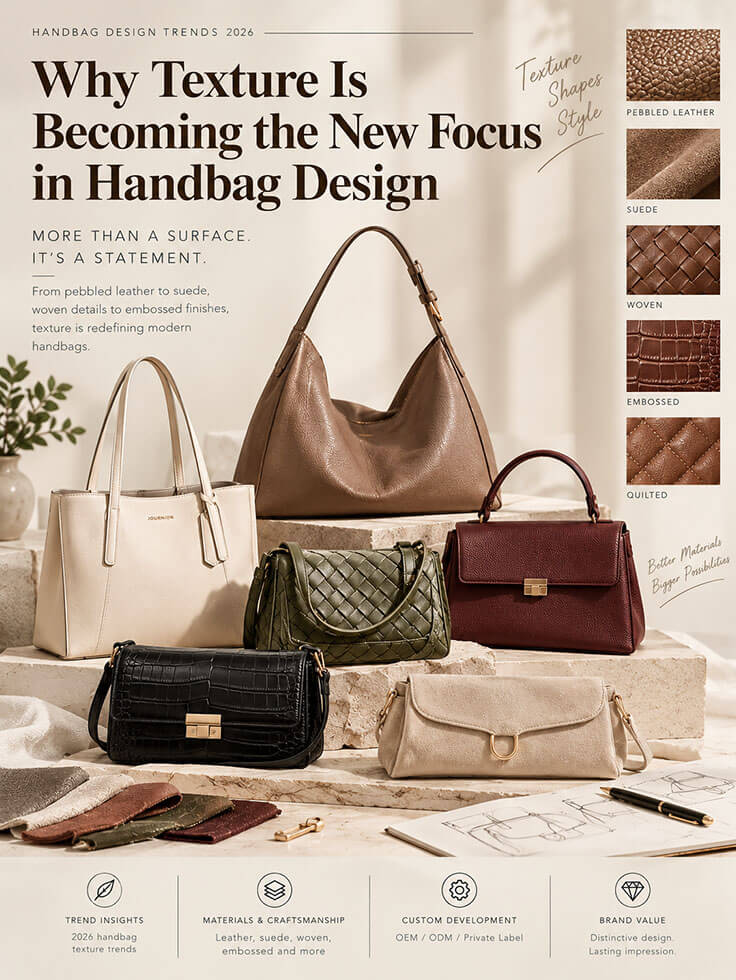
Leather handbags are often positioned in the premium market. The final material cost depends on leather type, grade, thickness, finish, usable yield, and sourcing conditions.
Leather selection can also affect cutting efficiency, edge finishing, reinforcement, and stitching requirements.
Brands developing custom leather handbags should confirm the expected appearance, flexibility, surface quality, and finishing standards with their manufacturer.
Vegan Leather Handbags
Vegan leather offers a range of textures, finishes, colors, and structural characteristics.
Depending on the specific material, it can support minimalist shoulder bags, structured handbags, totes, and fashion crossbody bags.
However, vegan leather is not one uniform material category. Different compositions and quality levels can have significantly different prices and performance characteristics.
Nylon Handbags
Nylon is frequently considered for lightweight, practical handbags, including crossbody bags, backpacks, and work totes.
The cost depends on factors such as fabric density, coating, texture, water resistance, and color availability.
Specialized nylon fabrics may require different sourcing arrangements from readily available standard materials.
Canvas and Recycled Materials
Canvas is commonly used for casual totes, shopping bags, and lifestyle collections. Recycled materials, including recycled polyester, may help brands develop products aligned with specific sustainability objectives.
However, recycled content, certifications, traceability, fabric performance, and sourcing requirements can affect the overall budget.
Material Cost Comparison
| Material | Potential Cost Influence | Typical Design Applications |
|---|---|---|
| Standard nylon | Lightweight construction and fabric specifications | Crossbody bags, work bags, everyday handbags |
| Canvas | Fabric weight, weave, printing, and finishing | Tote bags, casual bags, lifestyle collections |
| Vegan leather | Composition, texture, finish, and backing | Shoulder bags, totes, fashion handbags |
| Genuine leather | Leather grade, yield, finish, and thickness | Premium handbags, leather totes, structured bags |
| Recycled fabrics | Recycled content, sourcing, testing, and certification requirements | Sustainable handbags, lifestyle bags, branded collections |
This comparison is directional rather than a fixed price ranking. A premium nylon fabric can cost more than some leather alternatives, depending on its specification and supply chain.
The most suitable material is the one that meets your product requirements and target price point.
4. Hardware and Branding: Small Details That Increase Costs
Hardware and branding components may represent a relatively small portion of a handbag's appearance, but they can have a meaningful impact on development and production costs.
Standard Hardware vs. Custom Hardware
Standard hardware options may include:
-
Zippers and zipper pulls
-
Metal buckles
-
D-rings and strap adjusters
-
Magnetic closures
-
Clasps and decorative locks
Using existing hardware can reduce the need for new tooling and shorten the development process.
Custom hardware may involve additional design work, mold development, sampling, plating selection, and approval procedures.
For brands developing distinctive collections, custom hardware can be valuable. However, the visual benefit should be weighed against its upfront development cost and minimum order requirements.
Logo and Branding Options
Common handbag branding methods include:
-
Embossed or debossed logos
-
Metal logo plates
-
Woven labels
-
Printed logos
-
Embroidered branding
-
Branded zipper pulls
-
Custom hangtags and packaging
Different branding methods have different setup costs and production requirements.
For example, a simple woven label may involve less development work than a custom-shaped metal logo plate. The final cost depends on the size, material, quantity, production method, and finishing requirements.
Cost-saving tip: If you are launching your first collection, consider using standard hardware and customizing the logo, color palette, lining, or packaging first. This can help establish a recognizable brand identity without introducing too many custom components at once.
5. Sample Development: How Much Should You Budget?
Sample development is a critical stage of custom handbag manufacturing. It allows brands to evaluate a product physically before approving bulk production.
A handbag sample helps confirm the silhouette, dimensions, materials, construction, hardware, comfort, and internal organization.
Common Stages of Handbag Sampling
Stage 1: Design Review and Pattern Development
The manufacturer reviews the design concept, measurements, construction requirements, and material choices before preparing the initial sample.
If the brand has a complete technical pack, this stage may be more straightforward. If the design exists only as a reference image or rough sketch, additional clarification and development work may be required.
Stage 2: First Prototype
The first physical sample allows the brand to review the overall appearance and basic functionality.
Possible adjustments may involve:
-
Bag proportions and dimensions
-
Strap length and attachment positions
-
Pocket placement
-
Closure design
-
Material flexibility
-
Structural support
Stage 3: Sample Revision
A revision may be necessary when the initial sample does not fully meet the approved design requirements.
Minor adjustments may be relatively straightforward, while significant changes to the silhouette, construction, or material selection may require additional work.
Stage 4: Pre-Production Sample
A pre-production sample confirms the product specification before bulk manufacturing begins. Depending on the agreed process, it may use the intended production materials, hardware, colors, and construction methods.
This stage is important because the approved sample becomes a reference for production quality.
How Many Sample Rounds Are Needed?
There is no universal number of sample rounds for every handbag project.
A design based on an existing pattern may require fewer revisions than a completely new structured leather handbag.
To reduce sampling costs, provide clear specifications before development and consolidate feedback from all decision-makers into one revision list whenever possible.
6. MOQ: Why Order Quantity Changes the Unit Cost
MOQ stands for Minimum Order Quantity. It is the minimum quantity a manufacturer is willing or able to produce for a particular product specification.
MOQ is one of the most important factors affecting custom handbag prices.
Some costs are fixed or semi-fixed regardless of order quantity. These may include pattern preparation, certain tooling expenses, production setup, and some material procurement requirements.
When these costs are distributed across more units, the allocated cost per handbag can decrease.
Example: How Fixed Costs Affect Unit Economics
Imagine a hypothetical custom handbag project with a US$300 development or setup expense.
-
For an order of 300 handbags, the allocated expense is US$1 per bag.
-
For an order of 1,000 handbags, the allocated expense is US$0.30 per bag.
This example illustrates how order quantity affects cost allocation. It does not represent a guaranteed factory price or suggest that every additional unit becomes cheaper at the same rate.
Is a Larger Order Always Better?
Not necessarily.
A larger order may reduce the manufacturing cost per unit, but it also increases the total cash commitment and inventory risk.
For emerging brands, it is important to balance unit cost against sales forecasts, cash flow, storage capacity, and product uncertainty.
Before placing an order, ask the manufacturer to quote several realistic quantity tiers using exactly the same product specification.
Also confirm whether MOQ applies per style, per color, per material, or per logo configuration. These distinctions can make a significant difference when planning a multi-style collection.

7. Manufacturing Costs: What Is Included in the Price per Bag?
Once a sample is approved, the next major expense is bulk production.
The custom handbag manufacturing cost usually reflects several components.
Raw Materials
This includes the outer material, lining, reinforcement, thread, webbing, and other materials needed to construct the handbag.
Material consumption and cutting efficiency also affect the final cost.
Hardware and Trims
Zippers, buckles, clasps, rings, adjusters, labels, and decorative components contribute to the bill of materials.
Special finishes or custom components may require separate setup costs.
Cutting and Sewing Labor
Handbag production involves multiple operations, including material cutting, panel preparation, sewing, assembly, edge finishing, and hardware installation.
A design with more panels, compartments, reinforcement points, or decorative details may require additional labor.
Lining and Internal Organization
Interior construction can add both materials and assembly time.
Examples include:
-
Zipper pockets
-
Slip pockets
-
Padded laptop compartments
-
Key clips
-
Dividers
-
Reinforced bases
These details can improve usability, but they should be prioritized according to the target customer and product positioning.
Finishing and Quality Control
Finishing processes may include edge painting, thread trimming, surface cleaning, hardware checks, and final inspections.
The exact requirements depend on the materials, product type, and agreed quality standards.
Packaging
Packaging can range from basic protective packaging to premium retail-ready presentation.
Dust bags, branded boxes, tissue paper, hangtags, and customized cartons can increase project costs and shipping volume.
When requesting a factory quotation, ask which materials, components, finishing processes, packaging items, and quality checks are included in the unit price.
8. Hidden Costs to Consider Before Launching a Custom Handbag
The initial development fee and factory unit price are only part of the total budget.
Brands should also consider expenses that may be quoted separately.
Shipping and Logistics
Sample shipping and bulk shipping are different cost categories.
International freight charges depend on shipment volume, weight, route, timing, delivery terms, and shipping method.
Customs Duties and Taxes
Depending on the destination market, the product classification, origin, and applicable regulations, import duties, taxes, or other charges may apply.
These costs should be evaluated before calculating the final landed cost.
Product Testing and Compliance
Certain markets, retailers, or product specifications may require material testing, chemical compliance documentation, or other quality-related assessments.
The applicable requirements depend on the intended market, materials, product use, and buyer requirements.
Packaging and Labeling
Retail packaging, barcodes, product labels, care information, and shipping cartons may create additional expenses.
Brands selling through retail partners or e-commerce platforms should confirm packaging specifications early.
Changes After Sample Approval
Changing the material, dimensions, hardware, color, or construction after sample approval may create additional development costs, material waste, and delays.
For this reason, approving the final specification before bulk production is essential.
9. OEM vs. ODM: Which Handbag Development Model Is More Cost-Effective?
Choosing the right manufacturing model can influence both the development process and the overall budget.
OEM Handbag Manufacturing
OEM stands for Original Equipment Manufacturing.
Under an OEM arrangement, the brand typically provides its own design or product specifications, and the manufacturer produces the handbag according to the agreed requirements.
OEM is suitable for brands with a clear product concept, existing technical drawings, or a well-developed product brief.
The amount of development work depends on how complete the design is and whether new patterns, components, or construction methods are required.
ODM Handbag Manufacturing
ODM stands for Original Design Manufacturing.
ODM may be suitable for brands seeking design support, existing product concepts, or a manufacturer-led development process.
Depending on the agreement, a brand may customize selected elements such as materials, colors, hardware, branding, and packaging.
Starting from an existing design framework may reduce some development work, but the actual savings depend on the required changes and the manufacturer's capabilities.
Private Label Handbag Manufacturing
Private label production allows a brand to sell handbags under its own brand identity.
Customization may include logo placement, color selection, labels, packaging, and product details, depending on the agreed scope.
For businesses entering the handbag market, comparing OEM, ODM, and private label options can help identify a development approach that fits their budget, product positioning, and launch timeline.
10. How to Reduce Custom Handbag Development Costs Without Sacrificing Quality
Cost control does not have to mean choosing the cheapest material or removing every functional detail.
The goal is to invest in the features that matter most to the target customer.
1. Prepare a Clear Design Brief
Include the target market, dimensions, preferred materials, colors, hardware, logo placement, functionality, packaging, target price, and estimated order quantity.
Clear specifications reduce avoidable communication errors and help manufacturers prepare more accurate quotations.
2. Use Standard Materials Where Practical
Stock materials and standard colors may be easier to source than highly specialized materials or custom color matches.
However, availability and minimum purchase quantities should always be confirmed.
3. Prioritize Important Design Details
Identify the features that define the product's identity.
For example, a handbag may achieve a premium appearance through high-quality material, refined proportions, clean stitching, and carefully selected hardware without requiring numerous decorative components.
4. Consider Existing Hardware
Standard hardware can help reduce tooling requirements and simplify sourcing.
Custom hardware can be introduced later when the product concept and demand have been validated.
5. Consolidate Sample Feedback
Review the sample carefully and provide one organized list of revisions rather than sending separate changes throughout the process.
This can reduce repeated communication and unnecessary sample rounds.
6. Plan Order Quantities Realistically
Request quotations at several production quantities, but choose an order based on sales expectations and financial capacity rather than unit price alone.
7. Define Quality Standards Early
Agree on acceptable materials, dimensions, stitching, hardware performance, color consistency, and finishing before bulk production.
Preventing defects and avoiding late-stage changes can be more cost-effective than correcting problems after manufacturing.
11. How to Request an Accurate Custom Handbag Quote
A detailed inquiry makes it easier for a custom handbag supplier to assess your project and provide a relevant quotation.
Before contacting a manufacturer, prepare as much of the following information as possible.
| Information | What to Provide |
|---|---|
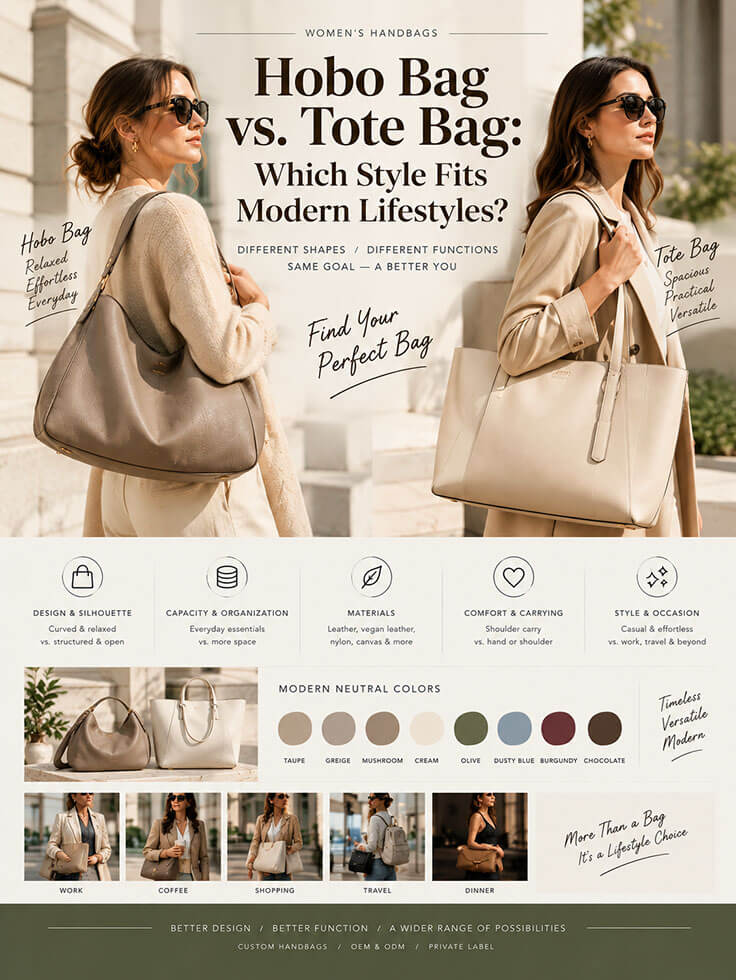
| Product type | Tote bag, shoulder bag, hobo bag, crossbody bag, or other style |
| Design | Reference images, sketches, or technical drawings |
| Dimensions | Length, height, depth, handle drop, and strap length |
| Materials | Outer material, lining, reinforcement, and preferred finishes |
| Colors | Main color, lining color, and hardware finish |
| Hardware | Zippers, buckles, clasps, logo plates, and other components |
| Functionality | Pockets, closures, compartments, and special features |
| Branding | Logo file, placement, size, and application method |
| Order quantity | Estimated quantity per style and color |
| Packaging | Standard packaging or customized retail packaging |
| Target price | Desired manufacturing cost or budget range, if available |
| Destination | Target market and delivery location |
| Timeline | Sample approval target and desired shipment date |
You do not need to have every detail finalized before making an initial inquiry. However, the more clearly you define the important requirements, the easier it becomes to assess feasibility and compare quotations.
When comparing manufacturers, make sure you are comparing the same specification, order quantity, quotation basis, and included services.
A low quotation may exclude sample development, special hardware, premium packaging, testing, or freight. An apparently higher quotation may include some of these items.
The best quotation is not necessarily the lowest one. It is the one that accurately reflects your product requirements, quality expectations, and commercial objectives.
12. Why Work With an Experienced Custom Handbag Manufacturer?
Developing a handbag involves more than turning a design image into a finished product. Material compatibility, construction planning, hardware selection, pattern accuracy, and sample evaluation all influence the final result.
An experienced custom handbag manufacturer can help brands assess these factors before moving into bulk production.
A suitable manufacturing partner should be able to discuss:
-
Material selection and sourcing
-
Pattern development and sampling
-
Construction methods and reinforcement
-
Branding and hardware options
-
Sample revisions and approval procedures
-
Bulk production planning
-
Quality control requirements
-
Packaging and delivery arrangements
For brands developing a new handbag collection, clear communication and a well-defined development process can make budgeting and production planning more predictable.
Journion works with handbag product concepts across different styles, materials, and customization requirements. Brands exploring OEM, ODM, or private label production can prepare their design references and product requirements to begin discussing suitable development options.
Conclusion: Plan Your Custom Handbag Budget With Confidence
So, how much does it cost to develop a custom handbag?
The answer depends on the design, material, hardware, sampling requirements, order quantity, production specifications, and delivery arrangements.
A straightforward design using available materials and standard components may require less development work, while a completely new handbag with complex construction or custom hardware may need a larger upfront budget.
The most effective way to control costs is to separate development expenses from bulk manufacturing costs and total landed costs. Prepare a clear product brief, compare quotations on the same basis, and prioritize the features that contribute most to your brand's identity and customers' needs.
Whether you are launching your first collection or expanding an established product line, working with a reliable OEM handbag manufacturer, ODM handbag manufacturer, or private label handbag manufacturer can help you develop a product that balances design, functionality, quality, and cost.
A well-planned handbag project is not simply about finding the lowest price. It is about making informed decisions at every stage, from the first concept to the finished product.