Women's Bag Buying Trends in North America and Europe: What Consumers Want in 2026
The women's handbag market is changing rapidly across North America and Europe.
In 2026, consumers are becoming more selective about what they buy. Instead of choosing a handbag based only on seasonal fashion trends, shoppers are increasingly considering quality, functionality, durability, versatility, design, sustainability, and value for money.
At the same time, social media, e-commerce, resale platforms, AI-powered discovery, and fashion trends are changing how consumers discover and evaluate women's bags.
For handbag brands, retailers, designers, and private-label buyers, understanding these changing preferences is becoming essential when developing new collections.
This article explores the key women's bag buying trends in North America and Europe in 2026 and what they mean for handbag brands and manufacturers.
1. Value for Money Is Becoming More Important
One of the strongest consumer trends in 2026 is the growing importance of perceived value.
US fashion consumers increasingly define value through quality, durability, and brand desirability, rather than simply looking for the lowest price. A recent analysis of US consumer research found that 66% of surveyed consumers identified value for money as their top fashion-shopping priority.
This is particularly relevant to the women's handbag market.
Consumers may be willing to pay more for a bag if they believe it offers:
- Better materials
- Stronger construction
- Longer product life
- Functional design
- Timeless styling
- Versatile usage
- Recognizable brand value
This creates opportunities for brands positioned between fast fashion and ultra-luxury.
The affordable luxury handbag and premium contemporary handbag segments can benefit from this demand for products that feel elevated without requiring an ultra-luxury price point.
What This Means for Brands
Instead of focusing marketing entirely on discounts, brands can communicate:
Material + Craftsmanship + Functionality + Longevity + Design
as the foundation of product value.
2. Functionality Is Becoming a Core Buying Factor
Fashion and functionality are increasingly merging.
In the US handbag market, consumers report using handbags frequently, with functionality and comfort particularly important for women. Research also highlights demand for durable, versatile, multi-compartment bags that fit modern lifestyles.
This trend is visible across current 2026 handbag collections.
Oversized totes, commuter bags, roomy shoulder bags, and work-to-weekend designs are becoming increasingly relevant.
Current Fall 2026 fashion coverage highlights the all-rounder carryall and commuter essential as important handbag directions, while Spring/Summer 2026 trends have also emphasized oversized, practical totes.
For consumers, a modern handbag may need to work for:
Work → Shopping → Travel → Weekend → Social Events
This is creating strong demand for multifunctional women's bags.
3. Oversized Totes Are Back — But With a More Fashionable Look
One of the clearest 2026 women's handbag trends is the return of larger bags.
Oversized totes and carryalls are increasingly being positioned as fashion products rather than purely practical work bags.
Current Fall 2026 coverage highlights roomy carryalls, while Spring/Summer 2026 runway trends have emphasized super-roomy totes designed for commuting and everyday life.
This reflects a broader lifestyle shift.
Consumers want handbags that can carry:
- Laptop
- Tablet
- Phone
- Wallet
- Cosmetics
- Water bottle
- Sunglasses
- Documents
- Chargers
- Personal accessories
But they do not necessarily want the bag to look like traditional business luggage.
The new direction is:
Functional capacity + premium fashion aesthetics
This creates an opportunity for brands to develop premium work totes, large leather totes, oversized shoulder bags, and women's laptop bags with more sophisticated silhouettes.
4. Work-to-Weekend Bags Are Becoming More Relevant
The traditional distinction between work bags and everyday handbags is becoming less important.
Hybrid working, flexible schedules, travel, and increasingly mobile lifestyles mean consumers want products that can transition between different environments.
A modern women's work bag may need to look appropriate in:
Office → Coffee Shop → Airport → Dinner → Weekend
This is why convertible and multifunctional designs are gaining attention.
Popular features include:
- Removable shoulder straps
- Adjustable straps
- Multiple compartments
- Laptop sleeves
- Secure zipper pockets
- Interior organization
- Lightweight construction
- Structured but flexible silhouettes
For B2B handbag brands, this suggests that versatility should be designed into the product rather than added as an afterthought.
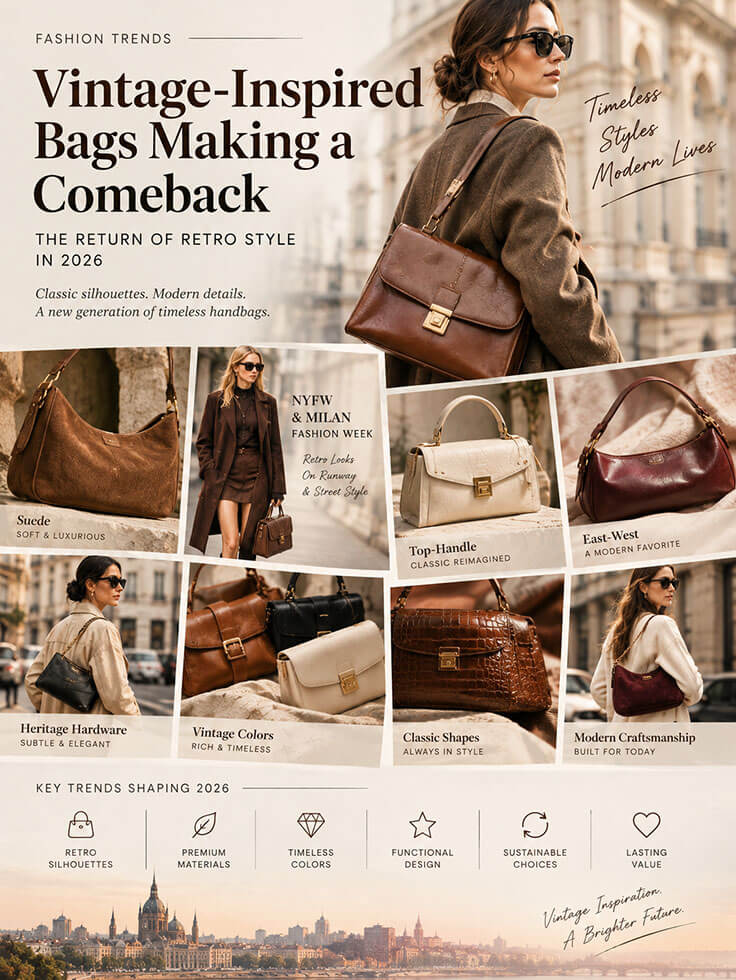
5. East-West and Slimmer Shoulder Shapes Continue to Gain Attention
Not every trend is oversized.
Alongside large totes, slimmer East-West handbags are continuing to appear strongly in 2026 fashion.
These elongated silhouettes provide enough space for daily essentials while maintaining a more refined appearance.
Spring 2026 trend coverage identified East-West bags as an important direction, particularly for weekend and evening use.
The appeal is easy to understand.
They offer:
- Compact proportions
- Elegant lines
- Easy shoulder carrying
- Fashion-forward silhouettes
- Enough room for everyday essentials
For premium women's handbags, the East-West silhouette can work particularly well in leather, suede, soft synthetic materials, and structured vegan leather.
6. Soft and Slouchy Handbags Are Replacing Overly Structured Shapes
Another important women's bag trend for 2026 is the continued popularity of softer construction.
Soft leather, suede, relaxed shoulder bags, slouchy totes, and hobo silhouettes are becoming more prominent.
Current fashion coverage highlights the popularity of slouchy top-handle bags and softer silhouettes for Fall 2026.
The appeal is closely connected to comfort.
Consumers increasingly want bags that feel:
- Lightweight
- Relaxed
- Comfortable
- Easy to carry
- Less formal
- More versatile
This does not mean structure is disappearing.
Instead, the market is creating a balance between:
Softness + Structure
For manufacturers, this requires careful control of material thickness, reinforcement, handle construction, lining, and edge finishing.
7. Suede Is Becoming a Strong Premium Material Trend
Suede is another material receiving significant attention in 2026.
It works particularly well with the current movement toward tactile, soft, understated luxury.
Suede can create a premium visual impression while fitting naturally into:
- Hobo bags
- Shoulder bags
- Totes
- East-West bags
- Top-handle bags
- Crossbody bags
The material also works well with the broader quiet luxury aesthetic.
For brands, suede-inspired textures can provide a way to create premium-looking products without relying heavily on logos or decorative hardware.
8. Quiet Luxury Is Evolving Rather Than Disappearing
Minimalist handbags remain relevant, but the definition of quiet luxury is changing.
The earlier version of quiet luxury often focused on:
- Minimal logos
- Neutral colors
- Simple shapes
- High-quality leather
- Understated hardware
In 2026, the aesthetic is becoming more tactile and expressive.
Consumers can still appreciate minimalism, but they are also responding to:
- Interesting textures
- Soft leather
- Suede
- Subtle hardware
- Refined silhouettes
- Vintage-inspired details
- Sculptural shapes
Spring 2026 runway coverage showed renewed interest in ladylike shapes, croc-embossed finishes, chain handles, and more expressive details alongside minimalist designs.
The result is a more flexible version of premium handbag design.
9. Consumers Want Bags That Express Personal Style
Functionality is important, but handbags remain highly emotional fashion products.
Consumers use handbags to communicate personal style.
Current North American fashion accessory research identifies self-expression as an important reason for handbag usage, while 2026 runway trends show strong interest in distinctive colors, animal-inspired patterns, woven textures, and decorative details.
This creates demand for both minimalist and statement handbags.
Two Parallel Directions
Quiet & Refined
- Cream
- Beige
- Brown
- Black
- Olive
- Burgundy
- Soft leather
- Minimal hardware
Expressive & Fashion-Forward
- Pastel colors
- Animal prints
- Croc textures
- Statement handles
- Decorative chains
- Woven surfaces
- Embellishment
The opportunity for brands is not to choose one direction exclusively, but to build collections that offer different levels of expression.

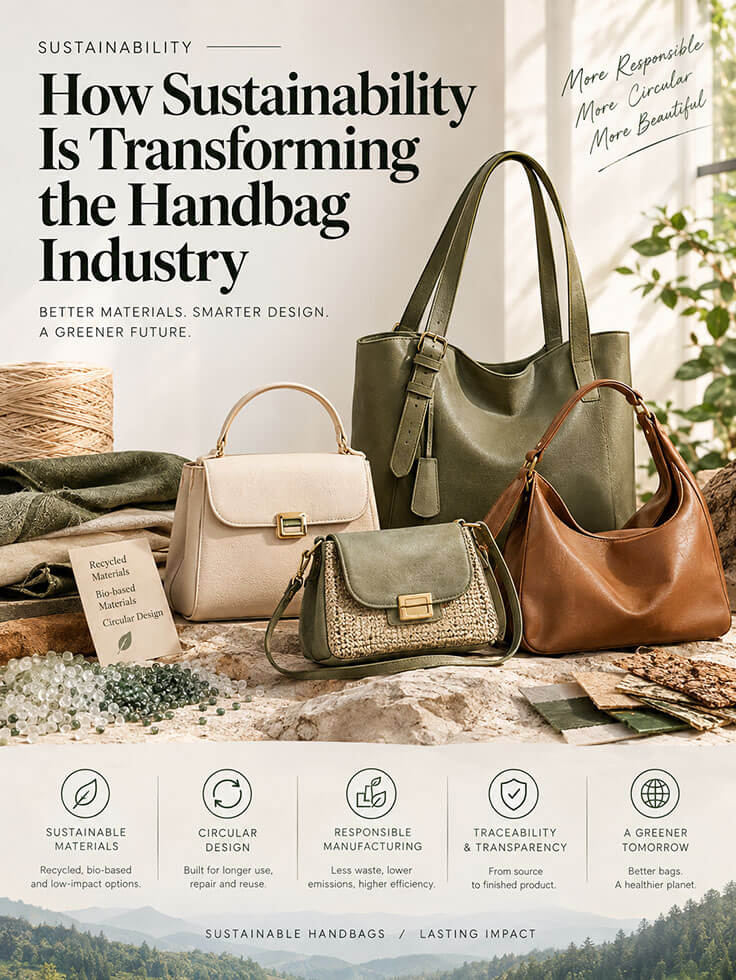
10. Sustainability Is Becoming Part of Product Value
Sustainability continues to influence women's handbag purchasing decisions in both North America and Europe.
However, the conversation is becoming more practical.
Consumers increasingly connect sustainability with:
Durability + Longevity + Resale + Responsible Materials
rather than simply looking for an “eco-friendly” label.
In Canada, industry research identifies premium and sustainable products as important opportunities in personal accessories, while resale is influencing primary handbag purchases.
Across Europe, resale is becoming increasingly mainstream, with value and sustainability among the reasons consumers are incorporating secondhand products into their shopping journeys.
For handbag brands, this means sustainable product development should consider the entire lifecycle:
Material → Manufacturing → Use → Repair → Resale → End of Life
11. Resale Is Changing How Consumers Evaluate Handbags
The resale market is becoming increasingly important to the handbag industry.
McKinsey's 2026 fashion outlook notes that secondhand fashion and luxury are expected to grow faster than firsthand fashion through 2027.
Vogue Business also reports that resale is increasingly becoming part of how consumers discover and evaluate brands, rather than simply an end-of-life channel.
For premium handbags, this creates an interesting new purchasing consideration:
“Will this bag still have value later?”
That can influence:
- Material selection
- Design longevity
- Brand positioning
- Product quality
- Authenticity
- Construction
- Limited editions
- Timeless silhouettes
A handbag designed for long-term use can potentially become more attractive in both the primary and secondary markets.
12. Gen Z Is Changing How European Consumers Discover Bags
Younger consumers are playing an increasingly important role in European fashion e-commerce.
NIQ's 2026 research covering more than 2 million online shoppers across 10 Western European countries found that the market is becoming increasingly fragmented, with consumers shopping across traditional fashion retailers, marketplaces, DTC brands, resale platforms, and social commerce.
This means handbag discovery is no longer limited to department stores or traditional fashion magazines.
Consumers may discover a handbag through:
- TikTok
- Fashion influencers
- Search engines
- AI-assisted discovery
- Online marketplaces
- Resale platforms
- Brand websites
For emerging handbag brands, this creates opportunities to compete through design, storytelling, product differentiation, and digital content, rather than relying entirely on physical retail distribution.
13. Online Research Is Becoming More Important Before Purchase
The handbag buying journey is becoming increasingly digital.
Consumers may discover a product on social media but then visit the brand website to investigate:
- Material
- Dimensions
- Interior capacity
- Reviews
- Manufacturing details
- Shipping
- Sustainability
- Product photography
- Return policies
- Brand reputation
In Canada, recent shopper research shows that consumers frequently combine physical and digital channels, with many shoppers researching across channels before completing a purchase.
For handbag brands, this means product pages need to do much more than display a product photograph.
A strong handbag product page should communicate:
What it looks like + How it functions + Why it is worth buying
14. Trust Is Becoming a Bigger Part of the Buying Decision
Consumers are becoming more deliberate about where they spend their money.
Canadian digital-shopping research, for example, shows that consumers increasingly consider cost, shipping, availability, convenience, and trust when making online purchases.
For handbag brands, trust can be built through:
- High-quality product photography
- Detailed product information
- Transparent materials
- Clear dimensions
- Customer reviews
- Manufacturing information
- Authentic brand storytelling
- Reliable customer service
- Clear shipping and return information
For premium handbags, trust is especially important because consumers are making a higher-value purchase.
15. North America and Europe Show Different Emphases
Although North American and European consumers share many handbag trends, there are some useful differences for brands to consider.
North America
The North American market currently shows strong demand for:
- Functional handbags
- Large totes
- Work bags
- Versatile everyday bags
- Affordable luxury
- Online shopping
- Premium materials
- Durability
- Personal expression
US consumer research emphasizes value, quality, durability, and multipurpose functionality.
Current North American trend coverage also shows strong interest in oversized totes, suede, business bags, and practical carryalls.
Europe
European consumers are increasingly influenced by:
- Design heritage
- Premium craftsmanship
- Sustainability
- Resale
- Contemporary silhouettes
- Fashion-week trends
- Vintage inspiration
- Social commerce
- Gen Z discovery
Western Europe's fashion e-commerce market is increasingly fragmented, while resale and value-focused platforms are becoming more influential.
The difference is not absolute, but it can help brands develop more targeted product strategies.
16. What Types of Women's Bags Have Strong Potential in 2026?
Based on current fashion trends and consumer preferences, several product categories stand out for brands targeting North American and European consumers.
1. Premium Everyday Tote Bags
Designed for:
- Work
- Shopping
- Travel
- Daily commuting
Key features:
- Large capacity
- Laptop compartment
- Interior organization
- Lightweight construction
- Premium materials
2. Soft Shoulder Bags
Popular for everyday fashion and casual luxury.
Potential materials include:
- Soft leather
- Suede
- Premium vegan leather
- High-quality nylon
3. East-West Shoulder Bags
Suitable for:
- Everyday essentials
- Dinner
- Weekend
- Travel
4. Convertible Crossbody Bags
Especially useful for consumers looking for versatility.
Features can include:
- Adjustable straps
- Removable straps
- Multiple carrying options
- Secure compartments
5. Premium Work Bags
A growing opportunity where functionality meets fashion.
Important features include:
- Laptop protection
- Document storage
- Organization
- Comfortable straps
- Professional styling
6. Sustainable Handbags
Using materials such as:
- Recycled nylon
- rPET
- Recycled polyester
- Cork
- Bio-based alternatives
- Responsible textiles
The key is to combine sustainability with attractive design and product performance.
17. What Handbag Brands Should Consider When Developing New Collections
Understanding consumer trends is only the first step.
The next question is how to turn those trends into commercially viable products.
A successful women's handbag collection for North America and Europe should consider five major factors.
Functionality
Does the bag solve a real everyday problem?
Aesthetic Appeal
Does the design feel contemporary without becoming too trend-dependent?
Material
Does the material support the desired price point, durability, texture, and positioning?
Versatility
Can consumers use the bag in multiple situations?
Long-Term Value
Will consumers still want the bag after the current season?
These factors can help brands move beyond short-term fashion trends toward products with stronger commercial potential.
18. What These Trends Mean for Handbag Manufacturers
For B2B handbag manufacturers, changing consumer preferences are creating new requirements.
Brands increasingly need manufacturing partners that can support:
- OEM handbag development
- ODM handbag collections
- Private label handbags
- Sustainable handbag manufacturing
- Premium leather handbags
- Vegan leather handbags
- Recycled nylon bags
- Functional work bags
- Large tote bags
- Crossbody bags
- Custom hardware
- Custom lining
- Multiple material combinations
- Small and medium production runs
- Rapid prototyping
The manufacturer's role is increasingly moving beyond production.
A strong OEM/ODM partner can help brands translate consumer trends into:
Concept → Material → Prototype → Testing → Production → Quality Control
This is especially important when brands are developing new handbag collections for multiple markets.
19. The Future of Women's Bag Buying
Looking ahead, women's handbag purchasing is likely to become even more balanced between fashion, function, value, and identity.
Consumers do not necessarily want the cheapest handbag.
They want products that feel worth buying.
That can mean:
- A beautiful design
- A practical interior
- Durable materials
- Comfortable carrying
- Sustainable sourcing
- Strong craftsmanship
- Long-term usability
- Resale potential
- A recognizable aesthetic
The future handbag is therefore not simply a fashion accessory.
It is becoming a combination of personal style, everyday functionality, lifestyle utility, and long-term value.
Conclusion
The women's bag buying trends in North America and Europe in 2026 show a market that is becoming more selective and more sophisticated.
Consumers are looking for handbags that combine quality, functionality, versatility, design, sustainability, and value for money.
Oversized totes and commuter bags are responding to practical lifestyles. Soft silhouettes and suede are bringing tactile luxury into everyday products. East-West bags offer a more compact fashion direction, while sustainable materials and resale are changing how consumers think about product value.
For handbag brands and B2B buyers, the opportunity is not simply to follow every seasonal trend.
The stronger strategy is to identify the consumer needs behind those trends and develop products that can remain relevant beyond a single season.
For manufacturers, this means combining design development, material expertise, craftsmanship, functionality, sustainability, and flexible OEM/ODM production to help brands build the next generation of women's handbags.