What Is a Soft-Structure Handbag?
Not every handbag needs to have a rigid, perfectly defined shape.
Some of today's most versatile women's handbags are designed to look relaxed, natural, and slightly flexible. These bags are commonly described as soft-structure handbags or soft structured handbags.
A soft-structure handbag is designed with flexible materials and construction techniques that allow the body of the bag to move and adapt during use while still maintaining a recognizable silhouette.
It sits between two traditional construction categories:
Soft handbag → Soft-structure handbag → Structured handbag
A completely soft bag may collapse when empty, while a rigid structured handbag maintains a strong shape regardless of how it is carried.
A soft-structure handbag offers a middle ground.
It provides enough support to look polished while retaining the relaxed appearance and comfortable feel associated with softer bags.
1. Soft Structure vs. Structured Handbags
Understanding the difference between soft and structured handbags makes it easier to understand this category.
Structured Handbags
Structured handbags typically feature:
- Firm reinforcement
- Strong internal panels
- Rigid bases
- Defined edges
- Precise silhouettes
- Shape-retaining construction
They are often associated with formal, professional, and polished styles.
Soft-Structure Handbags
Soft structured handbags usually feature:
- Flexible materials
- Softer reinforcement
- Relaxed edges
- Natural draping
- Lightweight construction
- Comfortable carrying
They can look more casual and contemporary while still maintaining a premium appearance.
Completely Soft Handbags
A fully soft handbag may have:
- Minimal reinforcement
- Flexible construction
- Slouchy proportions
- Natural collapsing
- Highly relaxed silhouettes
The soft-structure handbag sits between these two extremes.
2. Why Are Soft-Structure Handbags Becoming Popular?
The popularity of soft-structure handbags reflects a broader movement toward comfort, versatility, and understated design.
Modern consumers increasingly expect handbags to work across different parts of their lifestyle.
One bag may need to move from:
Work → Coffee → Shopping → Travel → Dinner
A rigid handbag may look elegant, but it can sometimes feel less comfortable for extended use.
A soft structured handbag offers another approach.
It can maintain a sophisticated appearance while providing:
- Greater flexibility
- Comfortable carrying
- Lower visual rigidity
- More natural movement
- Easier everyday styling
This makes the style particularly relevant to everyday handbags and modern women's fashion collections.
3. The Soft-Structure Silhouette
One of the defining characteristics of a soft-structure handbag is its silhouette.
Instead of sharp geometric edges, the design often incorporates:
- Rounded corners
- Curved panels
- Relaxed sidewalls
- Soft gussets
- Flexible bases
- Natural folds
- Slightly slouchy proportions
The result is a handbag that feels less architectural and more organic.
This is especially effective for contemporary fashion brands looking for a balance between minimalism and softness.
4. Common Types of Soft-Structure Handbags
Soft construction can be applied to many different handbag categories.
Soft Tote Bags
A soft tote combines the capacity of a traditional tote with a more relaxed body.
It can be suitable for:
- Work
- Shopping
- Travel
- Everyday use
Soft leather or premium nylon can create particularly attractive tote designs.
Soft Shoulder Bags
A soft shoulder bag can naturally follow the shape of the body.
This makes it comfortable for longer periods of wear.
Popular features include:
- Wide straps
- Soft gussets
- Flexible panels
- Adjustable straps
- Relaxed silhouettes
Soft Crossbody Bags
Soft crossbody bags can combine compact organization with comfortable movement.
They are particularly useful for everyday lifestyles where hands-free carrying is important.
Soft Hobo Bags
The hobo silhouette is naturally associated with soft construction.
Its curved shape and flexible body make it one of the most recognizable examples of a soft structured handbag.
Soft Clutch Bags
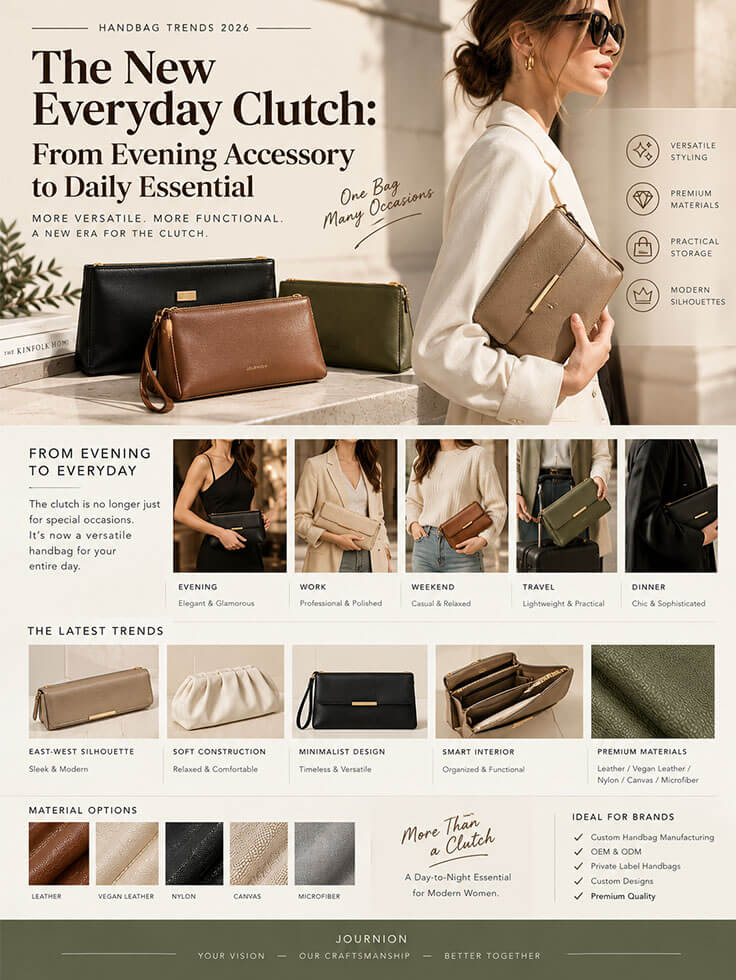
The soft-structure approach can also be applied to modern clutch bags.
A soft clutch can create a more relaxed interpretation of the traditional evening accessory while making it suitable for day-to-night styling.
5. Materials Used in Soft-Structure Handbags
Material selection has a major influence on how a soft handbag looks and feels.
Soft Leather
Leather is one of the most popular materials for premium soft handbags.
Depending on the leather type and thickness, it can provide:
- Natural drape
- Soft touch
- Premium appearance
- Durability
- Beautiful aging
For luxury-oriented collections, leather can create a sophisticated balance between softness and structure.
Vegan Leather
Vegan leather can also be used to create soft structured handbags.
Different constructions can produce different levels of:
- Flexibility
- Thickness
- Surface texture
- Weight
- Shape retention
This makes material selection particularly important during product development.
Nylon
Nylon is an excellent option for lightweight soft handbags.
It can provide:
- Lightweight construction
- Flexibility
- Abrasion resistance
- Water resistance
- Easy maintenance
Soft nylon handbags are particularly suitable for travel, commuting, and casual lifestyles.
Canvas
Canvas can provide a more casual interpretation of the soft-structure concept.
It works well for:
- Everyday totes
- Lifestyle bags
- Travel bags
- Casual shoulder bags
Microfiber
Microfiber can provide a smooth, soft-touch appearance while offering another option for premium handbag development.
It can be particularly useful when a brand wants a refined appearance without using traditional leather.
6. The Importance of Internal Reinforcement
A common misconception is that a soft-structure handbag has no reinforcement.
In reality, the right amount of reinforcement is essential.
Without sufficient support, a handbag may:
- Lose its shape completely
- Collapse unevenly
- Become difficult to use
- Look poorly constructed
Too much reinforcement, however, can make the bag feel rigid.
The goal is to create the right balance.
Manufacturers may use:
- Interlinings
- Foam
- Nonwoven reinforcement
- Fabric stiffeners
- Reinforced base panels
- Structural inserts
The specific combination depends on the desired silhouette and material.
This is one reason why working with an experienced custom handbag manufacturer is important when developing soft-structure products.
7. Soft Structure Does Not Mean Poor Structure
A premium soft handbag should still have excellent construction.
Important details include:
Stitching
Consistent stitching helps maintain the shape and durability of the bag.
Reinforced Stress Points
Handles and straps require additional reinforcement because they experience repeated loads.
Base Construction
The bottom of the handbag should provide enough support to prevent excessive deformation.
Lining
A quality lining can help the interior maintain its organization while improving durability.
Edge Finishing
Smooth edges can improve both appearance and longevity.
Hardware
Well-selected zippers, buckles, rings, and closures can complement the softer silhouette.
The result should feel relaxed without looking unfinished.

8. Soft Structure and Comfort
Comfort is one of the biggest advantages of this construction style.
A soft handbag can adapt more naturally to the body.
For example, a soft shoulder bag can sit comfortably against the side of the body rather than maintaining a rigid shape.
This can be particularly valuable for:
- Everyday handbags
- Travel handbags
- Large shoulder bags
- Crossbody bags
- Weekend bags
For brands developing women's handbags, comfort can become an important part of the product's value proposition.
9. Soft Structure and Interior Organization
Soft does not have to mean disorganized.
A well-designed soft structured handbag can include practical internal organization.
Possible features include:
- Zipper pockets
- Slip pockets
- Phone compartments
- Card slots
- Key clips
- Laptop sleeves
- Removable pouches
- Bottle holders
The challenge is to integrate these features without making the handbag too rigid.
For example, a soft tote can have a structured laptop compartment while allowing the main body to remain flexible.
This creates a useful combination of:
Soft exterior + organized interior
10. Soft-Structure Handbags and Minimalist Fashion
Soft structured handbags work particularly well with minimalist fashion.
Instead of relying on excessive decoration, designers can emphasize:
- Material texture
- Proportion
- Silhouette
- Stitching
- Hardware
- Color
- Craftsmanship
A simple soft leather shoulder bag in taupe, brown, cream, or black can look sophisticated without requiring large logos or decorative elements.
This makes the construction style suitable for brands interested in quiet luxury handbags and contemporary premium accessories.
11. Color Choices for Soft Structured Handbags
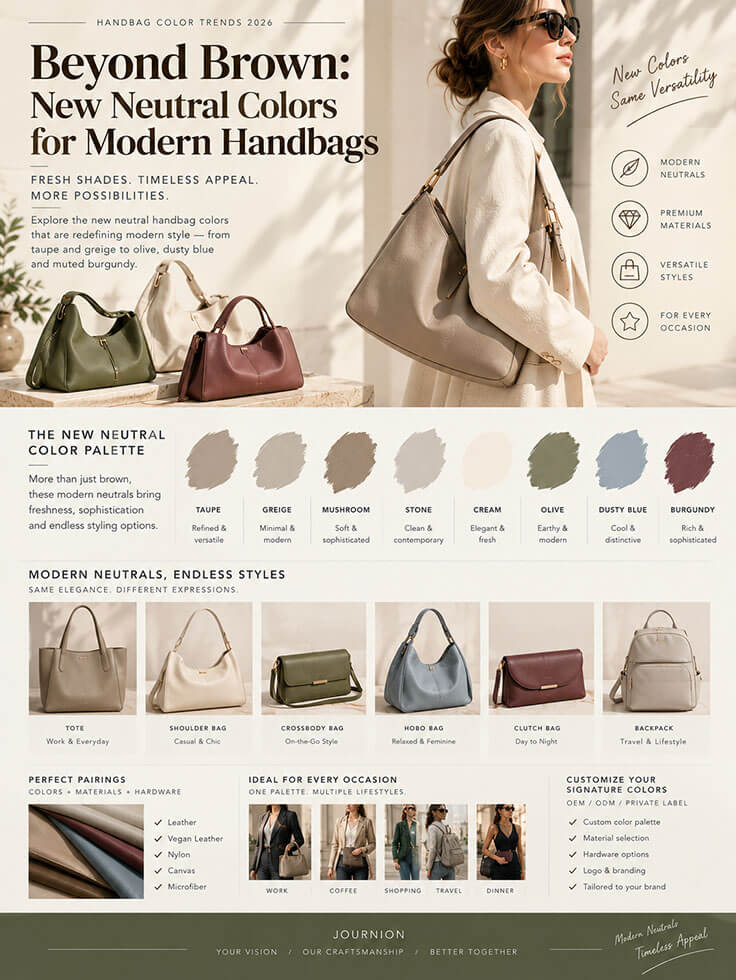
The relaxed character of soft handbags works particularly well with sophisticated neutral colors.
Popular options include:
- Cream
- Beige
- Taupe
- Camel
- Chocolate brown
- Burgundy
- Olive green
- Black
- Soft gray
Neutral colors can make the handbag easier to style across different occasions.
For a premium collection, a brand might develop one silhouette in several complementary colors rather than creating completely different designs for every colorway.
12. Soft Structure Creates Different Design Opportunities
One advantage of soft construction is that designers can experiment with shape.
Possible design directions include:
Slouchy
Relaxed and casual.
Rounded
Soft and feminine.
Padded
Modern and tactile.
East-West
Elongated and contemporary.
Crescent
Curved and fashion-forward.
Folded
Architectural but flexible.
Gathered
Textural and expressive.
This flexibility makes soft construction useful for both classic and trend-driven handbag collections.
13. Soft-Structure Handbags for Different Occasions
A soft structured handbag can be designed for almost any lifestyle.
Work
A larger soft tote can accommodate:
- Laptop
- Documents
- Notebook
- Charger
- Personal essentials
Weekend
A relaxed shoulder or crossbody bag can provide comfortable everyday storage.
Travel
A lightweight nylon or soft canvas bag can prioritize functionality.
Evening
A smaller leather clutch can provide a sophisticated interpretation of soft construction.
Everyday
A medium-sized shoulder bag can combine comfort, organization, and style.
This versatility is one reason soft structured handbags have become an interesting category for contemporary brands.
14. Why Soft Structure Is Important for Custom Handbag Manufacturing
For brands developing their own handbag collections, soft structure provides a wide range of customization possibilities.
A custom handbag manufacturer can adjust:
- Material
- Thickness
- Reinforcement
- Dimensions
- Silhouette
- Handle construction
- Strap design
- Lining
- Hardware
- Edge finishing
- Interior organization
Even small changes can significantly affect the final appearance.
For example, increasing the reinforcement slightly can transform a very soft tote into a more polished semi-structured handbag.
Reducing reinforcement can create a more relaxed silhouette.
This gives brands significant control over product positioning.
15. OEM vs. ODM for Soft-Structure Handbags
Soft-structure handbags can be developed through both OEM and ODM handbag manufacturing.
OEM Handbag Manufacturing
OEM is suitable when the brand already has a defined design.
The manufacturer follows the brand's:
- Technical drawings
- Dimensions
- Materials
- Colors
- Hardware
- Branding
- Construction requirements
ODM Handbag Manufacturing
ODM can be useful when the brand has a general concept but wants help with:
- Design development
- Material recommendations
- Construction
- Functionality
- Sampling
- Cost optimization
For emerging brands, ODM development can provide a way to transform a broad concept such as “a premium everyday soft handbag” into a production-ready product.
16. Soft Structure and Private Label Handbags
The soft-structure category is also suitable for private label handbags.
A brand can start with a basic silhouette and customize:
- Logo
- Hardware
- Colors
- Materials
- Lining
- Packaging
- Dimensions
- Interior features
This allows the same fundamental construction concept to be developed into a unique product for different markets.
For premium private label collections, details such as edge finishing, stitching consistency, hardware quality, and lining construction can help differentiate the final product.
17. How to Develop a High-Quality Soft-Structure Handbag
When developing a soft structured handbag, brands should consider the following:
Step 1: Define the Purpose
Determine whether the bag is designed for:
- Work
- Travel
- Everyday use
- Weekend
- Evening
- Fashion
Step 2: Select the Material
Choose leather, vegan leather, nylon, canvas, microfiber, or another suitable material.
Step 3: Define the Desired Softness
Decide whether the bag should be:
Very Soft → Soft → Semi-Structured
Step 4: Determine Reinforcement
Select the appropriate interlining, base support, and structural components.
Step 5: Develop the Interior
Balance flexibility with useful organization.
Step 6: Select Hardware
Choose hardware that matches the overall design and target price.
Step 7: Create a Sample
Evaluate:
- Shape
- Weight
- Comfort
- Capacity
- Material behavior
- Hardware
- Stitching
- Functionality
Step 8: Refine the Construction
Adjust reinforcement, dimensions, materials, and details based on sample feedback.
18. What Makes a Soft-Structure Handbag Look Premium?
Soft construction alone does not automatically create a premium handbag.
The perceived quality depends on the combination of many details.
Premium Materials
High-quality leather, vegan leather, nylon, or microfiber can create a better tactile experience.
Precise Stitching
Consistent stitching communicates craftsmanship.
Smooth Edge Finishing
Clean edge painting or binding can significantly improve the finished appearance.
Refined Hardware
High-quality hardware can elevate a simple design.
Quality Lining
A well-constructed interior improves both functionality and durability.
Balanced Structure
The bag should be soft without appearing unstable or poorly constructed.
This balance is particularly important for premium handbag manufacturing.
19. Soft-Structure Handbags and the Future of Women's Bags
The growing interest in soft construction reflects a larger evolution in women's handbags.
Consumers are increasingly looking for products that combine:
Fashion + Function + Comfort + Versatility
This means future handbag collections may continue to move away from extremely rigid silhouettes toward designs that offer greater flexibility while maintaining a refined appearance.
Soft-structure handbags are well positioned within this movement because they can adapt to different materials, sizes, functions, and price levels.
For brands, they provide a versatile foundation for developing modern women's handbags.
Conclusion
A soft-structure handbag combines the relaxed appearance and flexibility of a soft bag with enough internal support to maintain a refined and functional silhouette.
Unlike rigid structured handbags, soft structured handbags allow more natural movement and often provide greater comfort. They can be developed in leather, vegan leather, nylon, canvas, microfiber, and other materials, making them suitable for everything from premium shoulder bags and totes to crossbody bags, hobos, and clutches.
The key to successful soft-structure handbag manufacturing is balance.
The bag needs to be:
Soft enough to feel comfortable, but structured enough to look intentional.
For brands, this construction approach creates extensive opportunities for custom handbags, OEM/ODM handbag manufacturing, and private label handbags.
With the right materials, reinforcement, interior organization, stitching, hardware, and finishing techniques, a soft-structure handbag can offer the combination of comfort, functionality, and premium design that modern consumers increasingly expect.