Common Handbag Hardware Types and Their Applications
Understanding the Essential Components Behind Every High-Quality Handbag
Introduction
When consumers think about a premium handbag, they often notice the leather, shape, or craftsmanship first. However, one of the most important factors behind a bag's quality is its handbag hardware.
Hardware does much more than decorate a bag—it provides strength, security, durability, and functionality. High-quality bag hardware can significantly improve user experience while elevating the perceived value of a handbag.
Whether you're designing a luxury tote, crossbody bag, shoulder bag, or backpack, understanding different handbag hardware types is essential for creating products that are both beautiful and durable.
Why Handbag Hardware Matters
Handbag Hardware, Luxury Handbag Hardware
Premium hardware influences:
- Durability
- User experience
- Visual appeal
- Product longevity
- Brand perception
Poor-quality hardware may fade, break, tarnish, or become difficult to operate over time, while premium hardware maintains its appearance and performance for years.
1. Zippers
Handbag Zippers
Zippers are one of the most frequently used hardware components in handbags.
Common Applications
- Main compartment
- Interior pockets
- Back zipper pocket
- Laptop compartment
- Cosmetic pouch
Popular Types
- Metal zippers
- Nylon coil zippers
- Waterproof zippers
- Invisible zippers
Advantages
✔ Smooth operation
✔ Strong security
✔ Long service life
Premium luxury handbags often feature polished metal zipper pulls that complement the overall design.
2. Magnetic Snaps
Handbag Magnetic Snap
Magnetic closures provide quick access while maintaining a clean appearance.
Commonly used in:
- Tote bags
- Shoulder bags
- Handbags
- Briefcases
Benefits include:
- Easy one-hand opening
- Hidden installation
- Elegant appearance
Many minimalist handbags combine magnetic snaps with zipper closures for added security.
3. Buckles
Handbag Buckles
Buckles serve both decorative and functional purposes.
Applications include:
- Adjustable shoulder straps
- Belt details
- Decorative accents
- Closure systems
Popular buckle styles:
- Roller buckles
- Square buckles
- Pin buckles
- Double-frame buckles
Luxury brands often use custom-designed buckles to reinforce brand identity.
4. D-Rings and O-Rings
D-rings for Handbags
D-rings connect various components of a handbag.
Common uses:
- Shoulder strap attachment
- Detachable straps
- Decorative hanging accessories
- Key holders
O-rings are often used for:
- Chain handles
- Decorative charms
- Strap connectors
Both provide flexibility while enhancing durability.
5. Swivel Hooks
Bag Hardware
Swivel hooks allow straps to rotate freely without twisting.
Frequently found on:
- Crossbody bags
- Messenger bags
- Camera bags
- Travel bags
Advantages:
- Prevent strap tangling
- Easy strap replacement
- Improved user comfort

6. Rivets
Metal Handbag Hardware
Rivets reinforce stress points where stitching alone may not provide sufficient strength.
Typically placed on:
- Handle attachments
- Strap bases
- Bottom corners
- Decorative panels
Premium rivets improve durability while adding subtle visual interest.
7. Feet (Bottom Studs)
Luxury Handbag Hardware
Bottom feet help protect the base of luxury handbags.
Benefits include:
✔ Prevent direct contact with surfaces
✔ Reduce wear
✔ Improve stability
✔ Maintain the bag's shape
They are especially common on structured leather tote bags and business handbags.
8. Chains
Purse Hardware
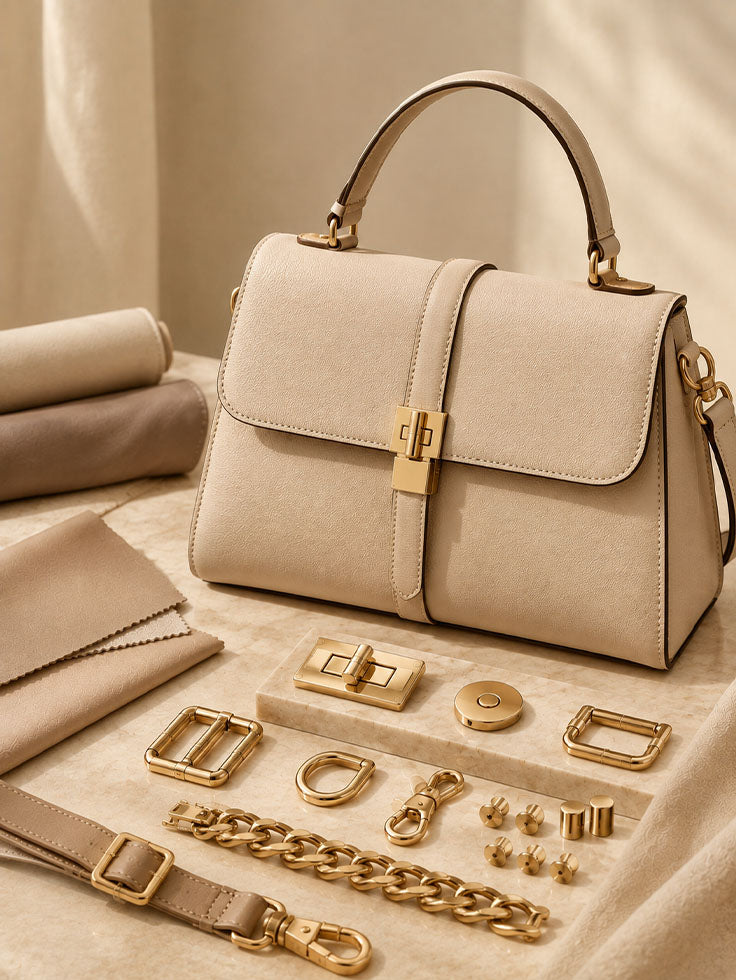
Metal chains remain one of the most recognizable luxury handbag details.
Popular applications:
- Shoulder straps
- Decorative accents
- Evening bags
- Crossbody bags
Common finishes include:
- Gold
- Silver
- Gunmetal
- Matte black
Chain hardware creates a sophisticated, fashion-forward appearance.
9. Twist Locks
Handbag Closures
Twist locks combine security with luxury aesthetics.
Commonly used on:
- Structured handbags
- Briefcases
- Luxury totes
- Designer shoulder bags
Their polished appearance makes them a signature feature of many premium handbag collections.
10. Lobster Clasps and Spring Hooks
Handbag Clasps
These components allow detachable straps and accessories.
Applications include:
- Shoulder straps
- Key chains
- Wrist straps
- Decorative charms
Premium clasps should operate smoothly while maintaining secure attachment.
Popular Hardware Finishes
Luxury Handbag hardware
The finish influences the overall style of a handbag.
Gold Finish
Best for:
- Luxury collections
- Elegant handbags
- Quiet Luxury designs
Silver Finish
Ideal for:
- Modern fashion
- Business collections
- Minimalist aesthetics
Gunmetal
Perfect for:
- Contemporary designs
- Men's bags
- Urban collections
Matte Black
Popular for:
- Technical bags
- Outdoor collections
- Minimalist products
Choosing the Right Hardware Material
Metal Handbag Hardware
Premium manufacturers typically use:
Zinc Alloy
Advantages:
- Excellent durability
- Easy customization
- Premium surface finish
Stainless Steel
Benefits:
- Corrosion resistance
- Long lifespan
- Premium strength
Brass
Favored for:
- Luxury handbags
- Vintage collections
- High-end leather goods
Brass develops a beautiful natural patina over time.
How Premium Hardware Improves Product Quality
Premium Handbag Components
Quality hardware offers:
- Smooth functionality
- Better durability
- Corrosion resistance
- Enhanced aesthetics
- Stronger customer satisfaction
Combined with skilled craftsmanship, premium components significantly increase product value.
Handbag Hardware Trends for 2026
Handbag Hardware Trends
Current trends include:
- Minimalist hardware
- Matte metal finishes
- Hidden magnetic closures
- Lightweight components
- Sustainable recycled metals
- Custom engraved hardware
- Quiet Luxury aesthetics
These trends emphasize timeless elegance rather than excessive decoration.
Custom Hardware for Private Label Brands
Custom Handbag Hardware, OEM Handbag Manufacturer
Many brands now customize hardware to strengthen brand identity.
Popular customization options include:
- Logo engraving
- Exclusive buckle designs
- Custom zipper pulls
- Personalized metal plates
- Unique color finishes
- Sustainable metal materials
Working with an experienced OEM handbag manufacturer allows brands to develop distinctive hardware that enhances both functionality and brand recognition.
Frequently Asked Questions (FAQ)
What is handbag hardware?
Handbag hardware refers to the metal or functional components used in handbags, including zippers, buckles, clasps, rings, rivets, chains, and locks.
Which hardware material is best for handbags?
Zinc alloy, stainless steel, and brass are among the most popular choices due to their durability, corrosion resistance, and premium appearance.
Does handbag hardware affect quality?
Yes. High-quality hardware improves durability, functionality, and the overall luxury feel of a handbag.
Can brands customize handbag hardware?
Absolutely. OEM manufacturers can produce custom zipper pulls, engraved buckles, logo plates, chains, clasps, and other hardware tailored to a brand's identity.
Conclusion
While leather and craftsmanship often receive the most attention, handbag hardware is equally essential to creating premium products. From zippers and magnetic snaps to buckles, chains, rivets, and twist locks, each component contributes to the functionality, durability, and visual appeal of a handbag.
For brands developing private label collections, investing in high-quality custom handbag hardware not only improves product performance but also reinforces a distinctive brand image. By partnering with an experienced OEM handbag manufacturer, businesses can create handbags that combine exceptional craftsmanship, reliable hardware, and timeless design.