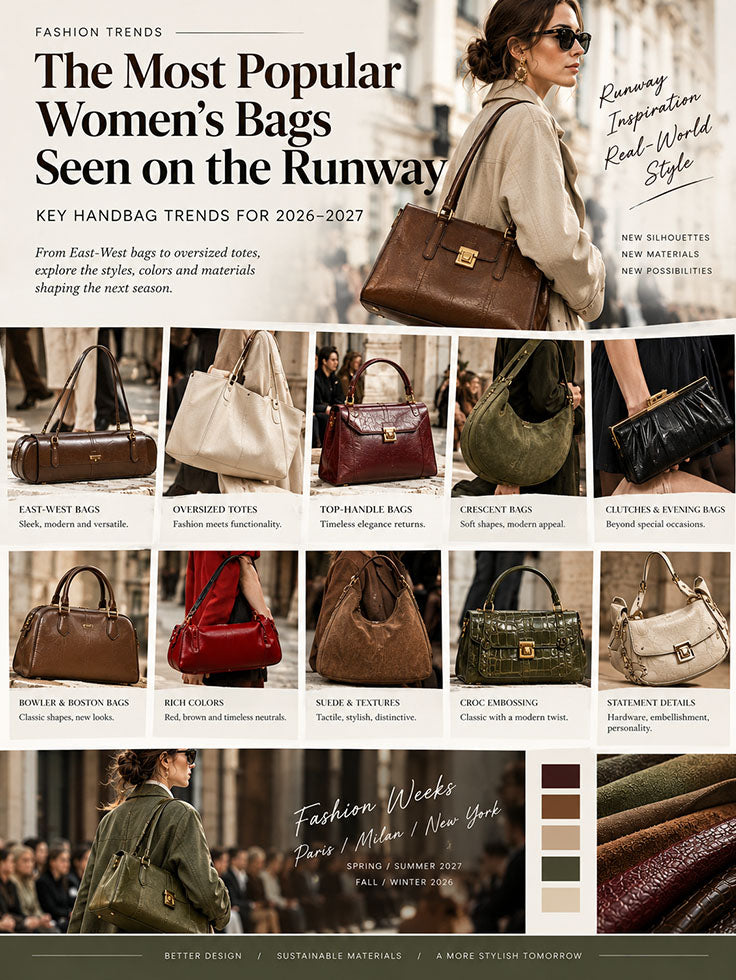



Eco-Friendly Materials Gaining Popularity: The Sustainable Materials Shaping Fashion in 2026
Sustainability is moving beyond a niche concept in fashion. In 2026, eco-friendly materials are becoming an increasingly important part of product development, especially as fashion brands look for ways to reduce reliance on virgin resources, improve traceability, and create products with longer-term value.
From recycled nylon and RPET to bio-based leather alternatives, organic fibers, forest-friendly materials, and next-generation textiles, the material landscape is changing rapidly. At the same time, brands are paying closer attention to durability, recyclability, supply-chain transparency, and end-of-life solutions.
For handbag and accessories brands, this shift creates new opportunities to combine sustainable materials, premium aesthetics, functionality, and modern manufacturing.
Why Are Eco-Friendly Materials Gaining Popularity in 2026?
The sustainability conversation in fashion is becoming broader than simply choosing a "green" fabric.
Brands are increasingly evaluating the complete product lifecycle—from raw material sourcing and manufacturing to use, repair, reuse, recycling, and disposal.
The European Union's sustainable textile strategy is pushing the industry toward products that are more durable, repairable, and recyclable, while also encouraging greater use of recycled content and improved environmental information.
This means material selection is becoming a strategic decision rather than simply a marketing feature.
For handbag brands, the question is no longer only:
"Does this material look premium?"
It is increasingly:
"Where does this material come from, how is it produced, how long will it last, and what happens to the product at the end of its life?"
1. Recycled Materials Continue to Grow
Recycled materials remain one of the most practical directions for sustainable fashion manufacturing.
Among the most widely used options are:
-
Recycled polyester
-
RPET fabrics
-
Recycled nylon
-
Recycled cotton
-
Recycled fibers
-
Recycled textile waste
RPET, for example, can transform post-consumer plastic bottles into polyester fibers that can then be used for bags, backpacks, linings, and other textile products.
For bag manufacturers, recycled nylon and recycled polyester are particularly attractive because they can offer a combination of:
-
Lightweight construction
-
Durability
-
Water resistance
-
Easy maintenance
-
Flexible color options
-
Commercial scalability
This makes recycled materials suitable not only for casual bags but also for travel bags, backpacks, work bags, crossbody bags, and contemporary women's handbags.
For B2B brands, recycled materials can also become part of a broader sustainability story supported by material certificates, supply-chain documentation, and transparent sourcing.
2. Bio-Based Materials Are Moving Into the Mainstream
One of the most interesting developments in 2026 is the expansion of bio-based materials.
Instead of relying entirely on petroleum-based materials, researchers and fashion companies are exploring alternatives derived from renewable biological sources.
These include:
-
Plant-based leather alternatives
-
Mycelium-based materials
-
Grape-based materials
-
Cactus-based materials
-
Apple-based materials
-
Algae-derived materials
-
Bio-based fibers
-
Agricultural waste-derived materials
Recent material development is moving beyond simply creating an "alternative leather" and toward developing materials with specific performance characteristics such as softness, flexibility, durability, and improved environmental performance.
The 2026 sustainability direction from Stella McCartney is a strong example of this movement. Its Winter 2026 collection incorporates materials including forest-friendly viscose and acetate, organic cotton, ECONYL, grape-based VEGEA, recycled cotton, algae-based pigment, and Brewed Protein.
Meanwhile, new bio-based textile developments are expanding into materials designed to replicate the appearance and feel of traditional luxury fabrics while using renewable feedstocks.
For premium handbag brands, this opens an important design opportunity:
Sustainability no longer has to look rustic or overly casual.
Modern sustainable materials can be developed into polished, sophisticated products suitable for the premium market.
3. Vegan Leather Is Evolving — But "Vegan" Does Not Automatically Mean Sustainable
Vegan leather continues to attract attention in 2026, especially in the women's handbag market.
However, the industry is becoming more sophisticated about what the term actually means.
"Vegan" simply indicates that a product does not contain animal-derived leather. It does not automatically mean that the material is biodegradable, plastic-free, recyclable, or environmentally preferable.
Some vegan leather products are still primarily made from synthetic polymers such as PU or PVC, while newer alternatives incorporate plant-based or bio-based components.
This distinction is important for brands developing private label handbags, sustainable handbags, and vegan handbags.
Instead of using sustainability as a simple product label, brands should consider:
Material composition
What percentage of the material is recycled or bio-based?
Durability
Can the material withstand regular use?
Production process
How much energy, water, and chemical processing does it require?
End-of-life potential
Can the material be repaired, reused, recycled, or otherwise responsibly managed?
Certification and documentation
Can the manufacturer provide reliable material information and supporting documentation?
This more transparent approach is likely to become increasingly important as sustainability claims receive greater scrutiny.
4. Premium Brands Are Combining Sustainability With Luxury
One of the most important changes in sustainable fashion is the shift from:
Eco-friendly = basic
to:
Eco-friendly + design + craftsmanship + performance = premium product
Consumers and fashion brands increasingly expect sustainable products to perform at the same level as conventional products.
This is particularly relevant to handbags.
A sustainable handbag still needs:
-
High-quality materials
-
Strong stitching
-
Reliable hardware
-
Smooth zippers
-
Stable structure
-
Comfortable handles
-
Durable lining
-
Refined finishing
-
Attractive proportions
-
Long-term usability
The material itself cannot compensate for poor construction.
For premium handbag manufacturing, sustainability therefore needs to be integrated with craftsmanship and product engineering.
5. Durability Is Becoming Part of Sustainability
Another important 2026 trend is the growing emphasis on product longevity.
A bag that uses recycled materials but needs to be replaced after a short period may not provide the same long-term value as a durable product designed for years of use.
The EU's sustainable textile strategy specifically emphasizes durability, repairability, recyclability, and longer product lifecycles.
For handbag designers and manufacturers, this means sustainability can begin at the design stage.
Important considerations include:
-
Reinforced stress points
-
Stronger handle attachments
-
Durable zipper construction
-
Replaceable hardware where practical
-
High-quality lining
-
Repair-friendly construction
-
Timeless silhouettes
-
Material combinations that improve product lifespan
This approach is especially compatible with premium handbags, where consumers are increasingly interested in timeless products rather than disposable fashion.

6. Traceability Is Becoming More Important
Material sustainability is increasingly connected with supply-chain transparency.
Fashion brands want to know not only what a material is, but also where it came from and how it moved through the supply chain.
The EU's Digital Product Passport initiative is part of this broader movement. Product information can include material composition, origin, repairability, environmental information, reuse, recycling, and other lifecycle data. Textile products are among the sectors being prepared for future DPP requirements.
A 2026 study published in the Journal of Cleaner Production also found that traceability and raw-material information are important components of sustainable fashion, while consumers showed strong interest in Digital Product Passport-enabled transparency.
For B2B manufacturers, this means material documentation is becoming an increasingly valuable part of the production process.
Future-ready manufacturers may need to provide brands with information such as:
-
Material composition
-
Recycled content
-
Material origin
-
Certifications
-
Production information
-
Testing documentation
-
Supplier information
-
Packaging information
7. Sustainable Materials Are Expanding Beyond the Fabric
Sustainability is not limited to the main body material of a handbag.
A more complete sustainable product strategy can consider the entire bag.
Main Material
RPET, recycled nylon, recycled polyester, organic cotton, bio-based materials, or certified leather alternatives.
Lining
Recycled polyester or other lower-impact textile options.
Hardware
Long-lasting hardware can reduce the need for premature replacement.
Packaging
Recycled paper, recycled polybags, reduced packaging, and reusable packaging systems can lower unnecessary material consumption.
Labels and Trims
Brands can also explore recycled or lower-impact materials for hangtags, labels, thread, and decorative elements.
This creates a more comprehensive approach:
Sustainable Material → Sustainable Construction → Sustainable Packaging → Better Product Lifecycle
8. What Does This Mean for Women's Handbags?
The women's handbag market is particularly well positioned for sustainable material innovation.
Different handbag categories offer different opportunities.
Sustainable Crossbody Bags
Lightweight recycled nylon or recycled polyester can work well for practical everyday crossbody designs.
Sustainable Tote Bags
Recycled canvas, organic cotton, recycled nylon, and innovative textile blends can create versatile work and lifestyle totes.
Sustainable Backpacks
RPET and recycled nylon are particularly suitable for lightweight business, travel, and everyday backpacks.
Sustainable Vegan Handbags
Bio-based leather alternatives can create a more premium direction for fashion-forward handbags.
Sustainable Travel Bags
Durable recycled fabrics can combine functionality, water resistance, and long-term usability.
The opportunity is therefore not to create a single "eco bag."
It is to develop a portfolio of sustainable products for different consumer needs and price levels.
9. The New Sustainable Handbag Design Language
Interestingly, sustainable materials are also influencing the visual language of modern handbags.
In 2026, sustainability is increasingly compatible with the aesthetic directions of premium fashion:
-
Soft neutral colors
-
Natural textures
-
Minimal hardware
-
Clean silhouettes
-
Relaxed structures
-
Timeless shapes
-
Subtle material contrasts
-
Natural-inspired colors
-
Quiet luxury styling
Instead of making sustainability the visual focus, designers can allow the material quality and craftsmanship to communicate the product's value.
This creates a more sophisticated approach to sustainable handbag design:
Less "eco-looking," more premium, timeless, and purposeful.
10. What B2B Fashion Brands Should Consider When Choosing Sustainable Materials
For brands developing a new handbag collection, choosing an eco-friendly material should involve more than selecting the most popular sustainable keyword.
A practical evaluation should include five areas.
1. Aesthetic
Does the material achieve the desired premium appearance and hand feel?
2. Performance
Can it withstand everyday use, friction, moisture, and repeated opening and closing?
3. Manufacturing
Can the material be consistently cut, sewn, bonded, printed, and finished?
4. Documentation
Can the manufacturer provide reliable material information and relevant certificates?
5. Lifecycle
Can the finished product be repaired, reused, recycled, or maintained for longer?
This approach helps brands avoid choosing materials based solely on marketing claims.
11. The Future: From "Eco-Friendly" to "Better Materials"
The biggest shift may be that the fashion industry is gradually moving away from a simple "eco-friendly material" mindset.
The next stage is about better materials.
Better materials should ideally combine:
Lower environmental impact + strong performance + attractive design + durability + traceability + commercial scalability
This is especially important for B2B brands.
A material that is environmentally interesting but difficult to manufacture at scale may not be commercially viable.
A material that looks premium but lacks durability may not deliver long-term value.
And a sustainable material without reliable documentation may be difficult for brands to communicate responsibly.
The most successful materials will therefore be those that balance sustainability with design, performance, manufacturing efficiency, and market demand.
What This Means for Bag Manufacturers
For bag manufacturers, the growth of eco-friendly materials represents more than a material sourcing trend.
It is becoming an opportunity to provide complete sustainable product development solutions.
Manufacturers with experience in recycled fabrics, RPET, recycled nylon, vegan leather alternatives, sustainable packaging, and responsible production can help brands move from an initial sustainability concept to a commercially viable finished product.
At Journion, sustainable materials can be integrated into OEM, ODM, and private label handbag development, allowing brands to explore material selection, design, sampling, craftsmanship, and production within one development process.
For brands planning a new sustainable handbag collection, the goal is not simply to make a bag "eco-friendly."
The goal is to create a bag that is beautiful enough to desire, durable enough to keep, and responsibly designed from material to finished product.
Final Thoughts
Eco-friendly materials are gaining popularity because sustainability is becoming increasingly connected with product quality, innovation, transparency, and long-term value.
In 2026, recycled textiles, RPET, recycled nylon, bio-based materials, plant-based leather alternatives, and next-generation fibers are giving fashion brands more choices than ever.
But the future of sustainable handbags will not be defined by one material.
It will be defined by how intelligently brands combine materials, design, craftsmanship, durability, traceability, and responsible manufacturing.
For the next generation of women's handbags, sustainability is no longer simply a trend.
It is becoming part of the product itself.