

What Information Should You Prepare Before Customizing a Handbag?
What Information Should You Prepare Before Customizing a Handbag?
Developing a custom handbag is more than choosing a shape and adding a logo. For brands working with an OEM handbag manufacturer or ODM handbag manufacturer, the quality of the initial information can have a major impact on the development process.
A clear product brief allows the manufacturer to understand your expectations before sampling begins. It can also help control material selection, construction methods, development costs, production timelines, and final quality.
Whether you are creating a custom women's handbag, tote, crossbody bag, backpack, work bag, or private label collection, preparing the following information can make the process much smoother.
1. Start With Your Handbag Design Concept
The first step in custom handbag manufacturing is defining what you want to create.
You do not necessarily need a professionally finished technical drawing. Even a basic sketch, reference image, mood board, or existing product sample can help communicate the general direction.
Useful information includes:
- Bag type
- Overall shape
- Intended usage
- Target customer
- Design style
- Reference products
- Preferred proportions
- Structured or soft construction
- Minimalist or decorative details
- Fashion or functional positioning
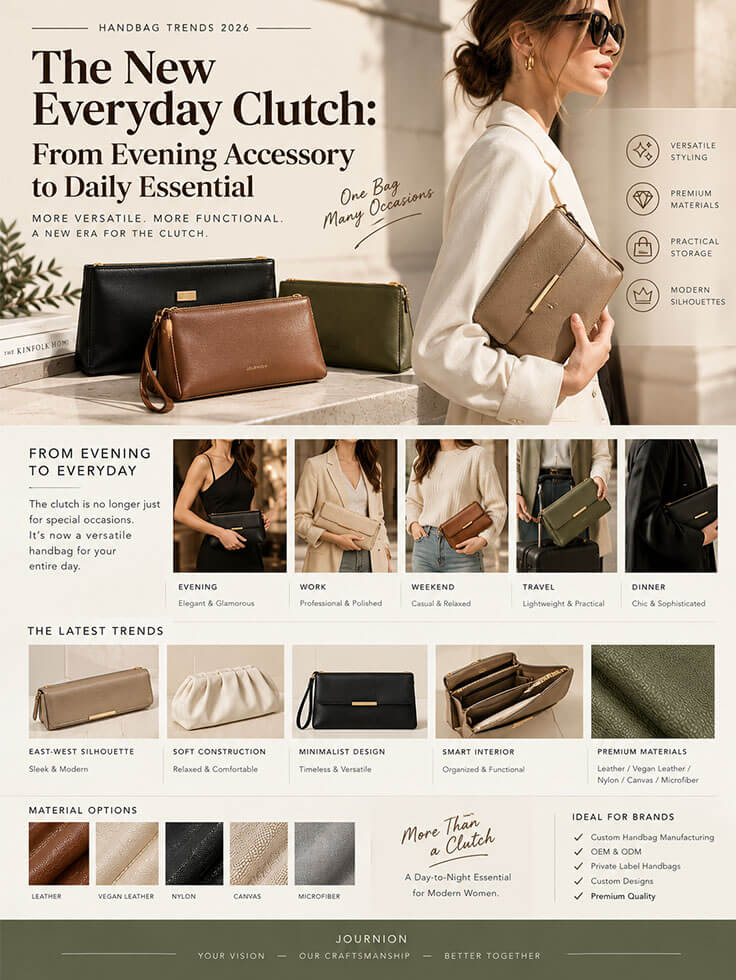
For example, you may want to develop a minimalist women's shoulder bag for everyday use or a structured leather tote for business customers.
The clearer the concept, the easier it is for a custom bag manufacturer to translate the idea into a manufacturable product.
2. Provide Drawings, Sketches, or Reference Images
Visual references are extremely useful during the product development stage.
If you already have a design, you can provide:
- Front view
- Back view
- Side view
- Bottom view
- Interior view
- Detail drawings
- Hardware references
- Stitching references
- Existing samples
- Inspiration images
If you only have a rough sketch, an experienced OEM handbag manufacturer can help transform the concept into a more practical construction.
However, reference images should be used to communicate specific features rather than simply copying another product.
For example, you may specify:
“We like the handle construction of Reference A, the interior organization of Reference B, and the overall silhouette of Reference C.”
This gives the manufacturer a much clearer understanding of your requirements.
3. Define the Bag Size and Dimensions
Dimensions are one of the most important pieces of information in custom handbag design.
Instead of simply saying “medium-sized bag,” provide specific measurements whenever possible.
Important dimensions include:
- Length
- Height
- Width
- Handle drop
- Shoulder strap length
- Strap width
- Pocket dimensions
- Laptop compartment size
- Interior capacity
For a business tote, for example, you may need the bag to accommodate a 13-inch or 15-inch laptop.
For a crossbody bag, the dimensions may need to accommodate a phone, wallet, passport, sunglasses, keys, and other everyday essentials.
Clear dimensions help the manufacturer determine the appropriate:
- Pattern size
- Material consumption
- Reinforcement
- Hardware
- Lining structure
- Production method
4. Choose the Right Handbag Materials
Material selection has a direct impact on appearance, durability, weight, cost, and construction.
Common materials used in handbag manufacturing include:
Genuine Leather
Leather is often selected for premium handbags because of its natural texture, durability, and sophisticated appearance.
Different leather types can produce very different results, so brands should specify the desired:
- Leather type
- Thickness
- Texture
- Finish
- Grain
- Color
- Surface treatment
Vegan Leather
Vegan leather handbags can provide a leather-like appearance while offering different price, texture, and design possibilities.
Brands should consider:
- PU or other material composition
- Thickness
- Surface texture
- Flexibility
- Abrasion resistance
- Color
- Environmental requirements
Nylon
Nylon is commonly used for lightweight handbags, travel bags, backpacks, and functional everyday designs.
It can provide:
- Lightweight construction
- Water resistance
- Durability
- Easy maintenance
- A modern technical appearance
Canvas
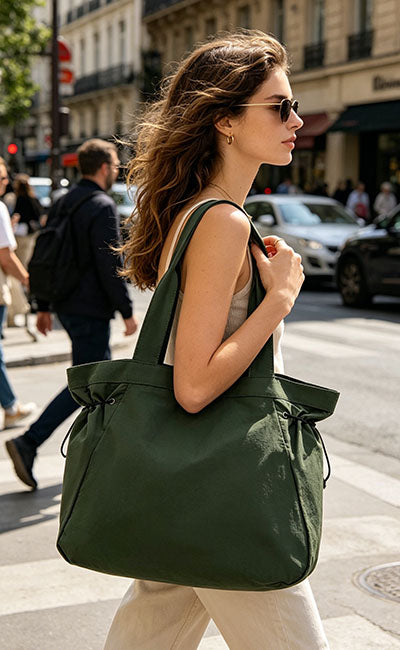
Canvas is suitable for casual, lifestyle, tote, travel, and eco-conscious collections.
Recycled Materials
Brands focusing on sustainability may consider materials such as RPET recycled fabrics, recycled nylon, recycled polyester, cork, or other sustainable materials.
Material selection should always match the product's intended market and price positioning.
5. Decide on the Lining and Interior Structure
The outside of a handbag is only part of the product.
Interior construction can strongly influence the user experience and perceived quality.
Before starting your custom handbag manufacturing project, consider:
- Lining material
- Number of compartments
- Zipper pockets
- Slip pockets
- Laptop sleeves
- Phone pockets
- Card slots
- Key clips
- Bottle holders
- Removable pouches
- Interior organizers
For example, a premium work tote may require:
Main compartment + laptop sleeve + zipper pocket + phone pocket + card holder + key clip.
A smaller crossbody bag may prioritize compact organization instead.
Clearly defining the interior structure helps the manufacturer create a more accurate pattern and sample.
6. Specify Hardware Requirements
Hardware is another important part of handbag development.
Common handbag hardware includes:
- Zippers
- Buckles
- D-rings
- O-rings
- Snap buttons
- Magnetic closures
- Rivets
- Logo plates
- Chain straps
- Adjusters
- Metal feet
You should communicate your preferred:
- Hardware type
- Shape
- Size
- Color
- Finish
- Material
- Logo treatment
Popular finishes may include:
- Gold
- Light gold
- Silver
- Gunmetal
- Matte black
- Brushed metal
For premium handbags, hardware finish should be coordinated with the overall design rather than treated as an afterthought.
7. Prepare Your Branding Requirements
If you are developing private label handbags, branding information should be prepared before sampling or production.
Your manufacturer may need information about:
- Logo
- Logo size
- Logo position
- Logo color
- Embossing
- Debossing
- Metal logo
- Printed logo
- Woven label
- Interior label
- Hangtag
- Packaging
If you already have a brand guideline, provide it together with the handbag design.
This can help maintain consistency across your entire product collection.

8. Explain the Functionality You Need
A successful custom handbag should not only look good. It should also perform according to its intended purpose.
Ask yourself:
What is the customer going to use this bag for?
For example:
Business Handbag
May require:
- Laptop compartment
- Document storage
- Secure zipper closure
- Multiple organizational pockets
- Reinforced handles
Travel Handbag
May require:
- Lightweight construction
- Water-resistant fabric
- Luggage sleeve
- Passport pocket
- Secure compartments
Everyday Women's Handbag
May prioritize:
- Comfortable straps
- Lightweight structure
- Easy-access pockets
- Flexible capacity
- Elegant appearance
Promotional or Corporate Gift Bag
May require:
- Strong branding area
- Customized packaging
- Gift-ready presentation
- Specific quantity requirements
- Cost-effective material selection
Defining functionality early helps your handbag supplier recommend the appropriate construction.
9. Define Your Target Market and Price Positioning
Your target market is important because it affects almost every aspect of the product.
Before developing the handbag, communicate:
- Target country
- Target customer
- Retail positioning
- Expected retail price
- Premium or mass-market positioning
- Intended sales channel
- Competitor references
For example, a handbag intended for the premium European market may require different materials, hardware, construction, packaging, and quality standards than a promotional tote designed for large-volume corporate events.
This information allows an OEM/ODM handbag manufacturer to better balance design, quality, and production cost.
10. Prepare Your Color Requirements
Color can be specified using:
- Pantone references
- Physical color samples
- Existing material samples
- Brand color guidelines
- Digital references
For premium handbag collections, it is useful to define colors for different components separately:
- Main body
- Handles
- Straps
- Lining
- Edge paint
- Stitching
- Hardware
- Logo
For example:
Main body: Warm Taupe
Edge paint: Dark Brown
Hardware: Brushed Gold
Lining: Beige
This creates a much more precise product specification.
11. Communicate Your Stitching and Construction Preferences
Construction details can significantly influence the appearance and durability of a handbag.
Important specifications may include:
- Stitching color
- Stitch density
- Seam position
- Reinforced stress points
- Handle attachment
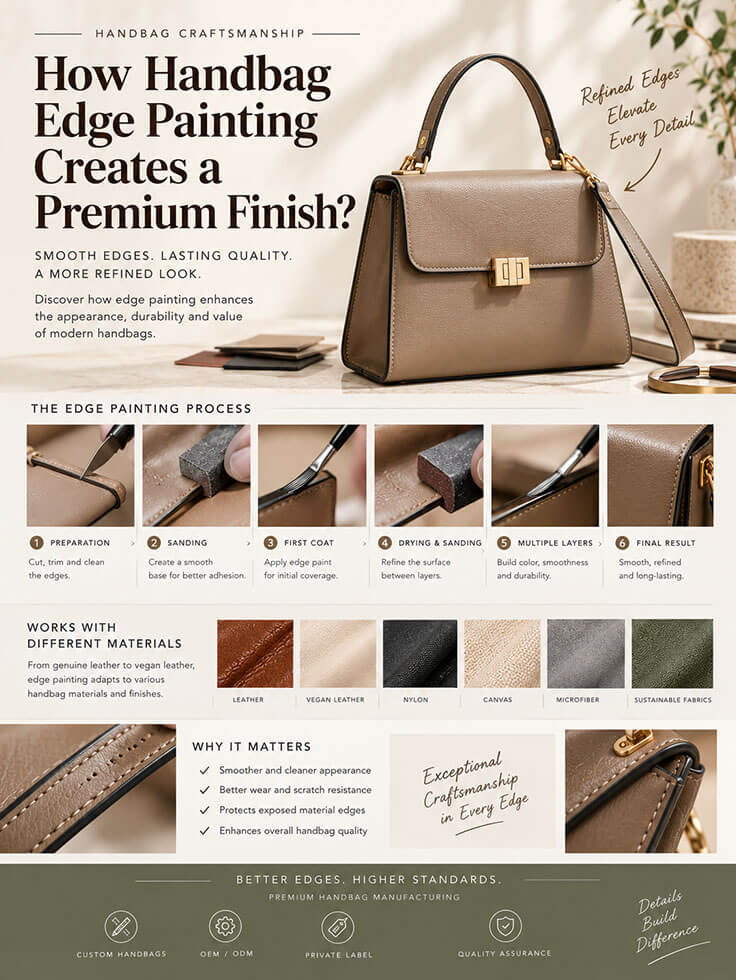
- Edge finishing
- Binding
- Top stitching
- Seam allowance
- Structural reinforcement
For premium handbags, small construction details can become part of the visual identity.
For example, precise top stitching and smooth edge painting can make a simple silhouette appear significantly more refined.
12. Specify Your MOQ and Expected Order Quantity
MOQ, or Minimum Order Quantity, should be discussed early in the project.
Manufacturers need to understand whether you are planning:
- Prototype development
- Small test production
- Initial collection
- Seasonal production
- Large-scale wholesale
- Long-term private label cooperation
Order quantity can influence:
- Material purchasing
- Hardware sourcing
- Production efficiency
- Unit cost
- Packaging
- Sampling strategy
If you are a new brand, it is useful to tell your manufacturer that you are testing the market rather than simply requesting a low MOQ without context.
13. Set Your Development and Production Timeline
Timing should also be discussed before development begins.
Your project may include:
Design → Quotation → Material Selection → Sampling → Sample Revision → Approval → Bulk Production → Quality Control → Packaging → Shipment
You should communicate:
- Desired sample date
- Target production date
- Launch date
- Marketing photography deadline
- Retail delivery deadline
- Seasonal requirements
A realistic timeline allows the custom handbag manufacturer to plan materials, sampling, production capacity, and quality control more effectively.
14. Prepare Quality Requirements
For brands developing premium handbags, quality expectations should be clearly defined before bulk production.
Depending on the product, you may want to specify:
- Stitching consistency
- Color consistency
- Material quality
- Hardware durability
- Zipper performance
- Edge paint quality
- Handle strength
- Seam strength
- Shape consistency
- Surface defects
- Packaging standards
A professional private label handbag manufacturer should be able to discuss quality control procedures during the development stage rather than only inspecting products after production.
15. Consider Packaging and Presentation
For premium handbags, packaging can be part of the customer experience.
Potential requirements include:
- Dust bag
- Tissue paper
- Hangtag
- Gift box
- Mailer box
- Custom carton
- Thank-you card
- Care instructions
- Branded stickers
- Recycled packaging
If the handbag is intended as a corporate gift, wedding gift, promotional gift, or premium employee gift, packaging requirements may be particularly important.
A Simple Custom Handbag Brief Checklist
Before contacting a handbag manufacturer, prepare the following information:
| Information | What to Prepare |
|---|---|
| Product Type | Tote, crossbody, shoulder bag, backpack, handbag, etc. |
| Design | Sketches, images, references |
| Dimensions | Length × Width × Height |
| Materials | Leather, vegan leather, nylon, canvas, RPET, etc. |
| Colors | Pantone or physical samples |
| Interior | Pockets, compartments, laptop sleeve |
| Hardware | Zippers, buckles, rings, logo hardware |
| Branding | Logo, labels, embossing, packaging |
| Function | Business, travel, everyday, gift, fashion |
| Target Market | Country, customer, sales channel |
| Price Position | Entry, mid-range, premium |
| MOQ | Expected quantity |
| Timeline | Sample and production deadlines |
| Quality | Testing and inspection requirements |
| Packaging | Dust bag, box, tags, etc. |
The more complete this information is, the easier it becomes for the manufacturer to provide an accurate quotation and development plan.
What If You Don't Have a Complete Design?
Not every brand starts with a complete technical drawing.
You may only have:
- A rough sketch
- A product idea
- A few reference images
- A material preference
- A target price
- A general customer profile
That is still enough to begin a conversation with an experienced ODM handbag manufacturer.
An ODM partner can help develop the product structure, recommend materials, improve functionality, and transform an initial concept into a production-ready handbag.
For brands with their own design, an OEM handbag manufacturer can work from the supplied specifications and produce the handbag according to the approved design.
Understanding the difference between OEM and ODM can therefore help brands choose the right development approach.
Why a Detailed Product Brief Matters
A detailed product brief is not simply paperwork. It creates a common reference between the brand and the manufacturer.
It can help reduce:
- Design misunderstandings
- Material mistakes
- Incorrect dimensions
- Unnecessary sample revisions
- Unexpected production costs
- Delays in product development
It also makes it easier to compare quotations from different handbag manufacturers because everyone is working from the same basic requirements.
For brands developing multiple products, a standardized handbag specification sheet can become an important part of the product development workflow.
Final Thoughts
Successful custom handbag manufacturing starts with clear communication.
Before contacting an OEM handbag manufacturer, prepare as much information as possible about your design, dimensions, materials, colors, functionality, branding, hardware, target market, quantity, quality requirements, packaging, and timeline.
You do not need to have every detail finalized before contacting a manufacturer. A professional custom handbag manufacturer can help refine the design and recommend practical solutions during the development process.
The key is to provide enough information to communicate your product vision clearly while remaining open to professional suggestions about materials, construction, cost, and manufacturability.
With a well-prepared product brief, the journey from concept to sample to bulk production becomes more organized, efficient, and predictable.