

The Rise of Suede-Effect Handbags: Why Soft Textures Are Shaping Modern Fashion
Introduction: Why Suede-Effect Handbags Are Gaining Popularity
Fashion trends are increasingly moving beyond bold logos and decorative details toward materials that create a distinctive look and feel. One design direction attracting renewed attention is the soft, velvety appearance of suede.
In 2026, suede handbags have become an important part of seasonal fashion conversations. Designers and fashion brands are incorporating suede textures into everyday totes, relaxed shoulder bags, bucket bags, hobo bags, and structured handbags.
What makes this trend interesting is that brands are not limited to traditional suede leather. Modern textile development also provides alternatives that reproduce the visual and tactile qualities of suede through engineered fabrics and synthetic microfiber materials.
This has created growing opportunities for suede-effect handbags, also known as suede-look or faux suede bags.
For fashion brands, these materials offer additional possibilities for product development, including different colors, textures, constructions, and price positioning.
But why are suede-effect handbags becoming more relevant, and what should brands consider when developing them?
Let's explore the materials, design trends, manufacturing techniques, and business opportunities behind this growing handbag category.
1. What Are Suede-Effect Handbags?
Suede-effect handbags are bags made with materials designed to reproduce the soft, brushed surface and matte appearance associated with genuine suede.
The term describes a visual and tactile effect rather than one specific material composition.
Depending on the supplier, suede-effect materials may include:
-
Polyester microfiber suede
-
Synthetic faux suede fabric
-
Microfiber-based nonwoven suede
-
Suede-like textiles with different backing structures
-
PU-based materials with a brushed or suede-like surface
Some materials use densely constructed microfibers that are brushed or finished to create a short, velvety surface. Others use a coated base fabric to achieve a similar appearance.
The exact construction varies by material supplier and product specification.
Genuine Suede vs. Suede-Effect Materials
Although they may look similar, genuine suede and suede-effect materials are not the same.
| Feature | Genuine Suede | Suede-Effect Material |
|---|---|---|
| Material origin | Animal hide | Usually synthetic textile or engineered material |
| Surface | Natural napped leather surface | Brushed or engineered suede-like surface |
| Composition | Animal-derived leather | Often polyester microfiber, sometimes with PU or other backing materials |
| Texture | Natural variations in grain and nap | Depends on fiber structure and finishing |
| Color consistency | Can vary naturally between hides | Can offer more controlled batch consistency |
| Care | Often requires specialized leather care | Depends on fiber composition and finishing |
| Customization | Depends on leather quality and treatment | May offer different colors, weights, and surface finishes |
According to the Canadian Conservation Institute's CAMEO materials database, faux suede is commonly produced using polyester microfibers on a supporting fabric, often polyurethane-based. However, suede-effect materials are not limited to this particular construction.
For brands, this distinction is important because a product described as a vegan suede handbag should have its actual material composition confirmed rather than being identified by appearance alone.
2. Why Suede-Effect Handbags Are Trending in 2026
The renewed popularity of suede handbags reflects several broader fashion directions.
The Continued Appeal of Soft Textures
Consumers are increasingly exposed to handbags that emphasize material character, tactile finishes, and understated design.
Unlike glossy leather or highly polished synthetic surfaces, suede-effect materials have a softer appearance that creates subtle depth.
This makes them suitable for brands developing minimalist and premium-looking collections.
A Connection to Quiet Luxury
Quiet luxury continues to influence handbag design through restrained branding, neutral palettes, clean silhouettes, and carefully selected materials.
A handbag does not necessarily need a large logo or decorative hardware to stand out.
A soft-textured handbag in chocolate brown, camel, taupe, or olive can create a sophisticated appearance through its material alone.
Relaxed Silhouettes Are Supporting the Trend
Current suede handbag collections include relaxed shapes such as hobo bags, slouchy totes, bucket bags, and oversized shoulder bags.
At the same time, suede is also appearing on structured top-handle handbags, demonstrating that the material is not limited to casual designs.
Vogue's August 2026 coverage highlights this range of silhouettes, from slouchy totes and hobo bags to more structured top-handle designs. Read Vogue's suede handbag trend report.
The Appeal of More Versatile Material Options
For manufacturers and brands, suede-effect materials provide additional options for creating a consistent design direction across different handbag categories.
Depending on the material specification, brands may explore different weights, colors, surface textures, and backing structures.
This makes suede-effect fabrics worth considering when developing seasonal collections or introducing a new material direction into an existing product range.
3. Popular Suede-Effect Handbag Styles
One reason the suede-effect handbag trend is commercially interesting is its versatility across different handbag shapes.
The same surface texture can create very different results depending on the silhouette.
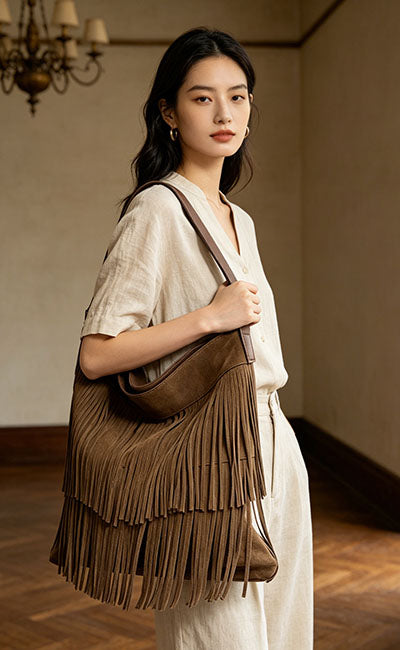
Suede-Effect Hobo Bags
<text> </text>
Suede-effect hobo bags are particularly suitable for relaxed, contemporary fashion collections.
Their soft silhouettes complement the velvety appearance of suede-like materials, creating a casual yet refined aesthetic.
Design features may include:
-
Rounded or crescent-shaped bodies
-
Soft shoulder straps
-
Minimal metal hardware
-
Relaxed construction
-
Neutral or earthy colors
For brands developing everyday handbags, this combination offers a useful balance between visual appeal and practical styling.
Suede-Effect Tote Bags
Suede-effect tote bags combine a spacious design with a softer material appearance.
They can be developed for work, shopping, weekend activities, and everyday use.
A brand may choose a more relaxed construction for casual collections or incorporate internal reinforcement to create a more structured tote.
Functional details such as zipper closures, inner pockets, reinforced handles, and a stable base can improve usability.
Suede-Effect Shoulder Bags
Suede-effect shoulder bags are suitable for customers who prefer compact, versatile handbags.
They can feature elongated silhouettes, curved panels, soft flaps, or minimal top closures.
A clean shape paired with understated hardware allows the material texture to become the main design feature.
Suede-Effect Bucket Bags
Bucket bags work naturally with soft materials because their construction can emphasize volume and relaxed proportions.
Drawstring closures, adjustable straps, and minimal hardware are common design directions.
A suede-effect bucket bag may be positioned as a casual everyday accessory or as part of a more premium seasonal collection.
Suede-Effect Top-Handle Bags
For a more polished appearance, brands can use suede-effect materials in structured top-handle designs.
This creates a contrast between the softness of the material and the defined shape of the bag.
The internal structure, lining, reinforcement, and handle attachments become especially important when developing this style.
4. The Best Colors for Suede-Effect Handbags in 2026
Color selection is an important part of developing a commercially appealing suede-effect handbag collection.
Because suede-like surfaces interact with light differently from smooth materials, the same color may appear softer, warmer, or more muted depending on the nap and finishing.
Several color directions are particularly suitable for contemporary collections.
Chocolate Brown
Chocolate brown remains a strong choice for premium-looking everyday handbags.
Its rich tone works particularly well with suede-like surfaces because it emphasizes depth and warmth.
Camel and Warm Tan
Camel and tan are versatile choices for seasonal handbags.
They pair naturally with cream, ivory, denim, beige, and other neutral colors.
Taupe and Mushroom
Taupe and mushroom shades support minimalist design directions.
They work well for shoulder bags, totes, hobo bags, and structured everyday handbags.
Burgundy and Deep Wine
Burgundy adds depth and visual richness to suede-effect materials.
It can be used for statement shoulder bags, compact top-handle styles, and premium seasonal collections.
Olive and Moss Green
Olive and moss green offer an alternative to traditional brown and beige.
These shades can give suede-effect handbags an earthy, contemporary appearance.
Black and Charcoal
Black remains a versatile color for year-round handbag collections.
A suede-like surface creates a softer visual effect than many smooth black materials.
Suggested Suede-Effect Handbag Color Palette
| Color | Design Direction | Suitable Handbag Styles |
|---|---|---|
| Chocolate Brown | Warm and sophisticated | Hobo bags, totes, shoulder bags |
| Camel | Classic and versatile | Bucket bags, everyday totes |
| Taupe | Minimalist and modern | Shoulder bags, crossbody bags |
| Burgundy | Rich and expressive | Top-handle bags, compact handbags |
| Olive Green | Contemporary and earthy | Hobo bags, casual shoulder bags |
| Black | Timeless and understated | Everyday bags, work handbags |
| Cream | Soft and refined | Small shoulder bags, fashion totes |
For brands developing new collections, using a coordinated palette across several handbag shapes can create visual consistency while allowing each style to have its own identity.
5. Suede-Effect Materials vs. Genuine Suede: Which Is Better for Handbag Manufacturing?
There is no universal answer to which material is better. The choice depends on the intended product, target market, budget, appearance, and performance requirements.
Advantages of Suede-Effect Materials
Depending on the material specification, faux suede handbag materials may offer several development advantages.
1. Greater Color Selection
Synthetic suede materials may be available in a wide range of colors, allowing brands to explore seasonal shades and coordinated collections.
2. Consistent Surface Appearance
Engineered materials can offer more controlled surface specifications than naturally variable hides, although consistency still needs to be checked between production batches.
3. Different Material Weights
Some suede-effect textiles are available in different weights and backing constructions, providing options for soft or more structured handbag designs.
4. Alternative Material Positioning
For brands seeking non-animal textile alternatives, certain synthetic suede materials may be suitable, subject to their verified composition.
5. Design Flexibility
Some engineered suede materials support processes such as embossing, printing, and other surface customization techniques. Feasibility depends on the specific material.
Considerations When Using Genuine Suede
Genuine suede offers natural material characteristics that synthetic alternatives may not fully reproduce.
Its natural grain, surface variations, and tactile quality can appeal to premium leather handbag markets.
However, natural suede requires careful material selection, cutting, and maintenance planning.
Which Material Should Brands Choose?
| Business Requirement | Possible Material Direction |
|---|---|
| Natural leather positioning | Genuine suede |
| Controlled synthetic material specification | Microfiber suede |
| A range of seasonal colors | Suitable polyester or microfiber suede |
| Non-animal product positioning | Verified synthetic or other suitable alternative materials |
| Premium natural texture | Genuine suede |
| Lightweight textile construction | Suitable suede-effect fabric |
The best option should be decided through material sampling and product testing rather than appearance alone.
6. How Suede-Effect Materials Influence Handbag Construction
The surface of a suede-effect material can look soft and flexible, but its actual construction characteristics depend on the backing, fiber structure, weight, and finishing.
This is why selecting the correct material is essential before developing a handbag sample.
Material Thickness and Flexibility
The thickness and stiffness of a material influence the final bag silhouette.
A lightweight suede-effect fabric may work well for a relaxed hobo bag, while a heavier or reinforced version may be more appropriate for a structured tote.
Nap Direction and Surface Consistency
Many suede-effect materials have a directional surface.
When the nap is brushed in different directions, the material may show slightly different light and dark shades.
During handbag manufacturing, cutting direction should be planned carefully so that panels have a consistent appearance.
Backing and Structural Support
Some suede-effect fabrics require additional backing, lining, or reinforcement to achieve the desired shape.
For example:
-
A structured top-handle bag may require reinforced panels.
-
A large tote may need a stronger base.
-
A soft shoulder bag may require less internal support.
-
A flap bag may need reinforcement to maintain its closure structure.
Stitching and Edge Finishing
The material's thickness, backing, and surface pile may influence stitching and edge finishing.
Manufacturers should evaluate seam allowances, stitch appearance, folding behavior, and edge construction during sampling.
These details are particularly important when suede-effect materials are combined with smooth leather or vegan leather trims.
7. How to Maintain the Quality of Suede-Effect Handbags
A premium-looking suede-effect handbag should maintain its intended appearance during normal use.
However, maintenance requirements vary depending on the actual material composition and surface treatment.
Important Material Considerations
Brands should evaluate:
-
Abrasion resistance
-
Colorfastness
-
Surface pilling
-
Nap consistency
-
Color transfer
-
Water or moisture sensitivity
-
Cleaning compatibility
-
Shape retention
Some microfiber materials may offer convenient maintenance characteristics, while others can show pressure marks, surface wear, or changes in nap direction.
It is important not to assume that every faux suede material is stain-resistant or waterproof.
Product Care Recommendations
Depending on the supplier's care instructions, general care guidance may include:
-
Avoiding excessive moisture.
-
Removing loose dust with a suitable soft brush.
-
Avoiding harsh cleaning chemicals.
-
Testing cleaning methods on an inconspicuous area.
-
Storing the handbag in a dry, ventilated place.
-
Keeping the bag away from prolonged direct sunlight.
For brands, providing accurate product care instructions can improve the customer experience and reduce misunderstandings about material performance.
The final care label should always be based on the specific material supplier's recommendations and relevant testing.

8. Sustainability Considerations: Is Suede-Effect Material Eco-Friendly?
As brands introduce alternative materials into their handbag collections, sustainability should be evaluated carefully.
One common misconception is that every synthetic suede or vegan suede material is automatically environmentally friendly.
This is not necessarily true.
Some suede-effect materials are made from polyester microfibers or include polyurethane-based components.
While these materials can provide an alternative to animal-derived suede, synthetic polymers also have environmental considerations.
For example, the sustainability assessment organization Good On You highlighted in its June 2026 material guide that polyurethane is a plastic material with important resource, pollution, and end-of-life considerations.
What Should Brands Check?
Before describing a handbag as sustainable, brands should review:
-
Exact fiber composition
-
Percentage of recycled content, if applicable
-
PU or other coating composition
-
Available material certifications
-
Supplier traceability information
-
Material durability and expected product lifespan
-
Cleaning and maintenance requirements
-
End-of-life and recycling limitations
Consider Recycled Microfiber Options
Some specialty suede-like materials incorporate recycled or partially plant-based content.
For example, Toray describes its Ultrasuede material as a microfiber-based nonwoven material with a suede-like texture and highlights the use of resource-recovery systems and plant-based polymers in certain material developments.
However, these characteristics are product-specific and should not be generalized to all suede-effect materials.
Sustainability Is More Than Material Selection
A handbag's environmental profile also depends on its manufacturing process, product lifespan, packaging, supply chain, and end-of-life considerations.
For brands developing sustainable handbag collections, requesting documentation and verifying specific material claims is essential.
9. Custom Suede-Effect Handbag Development for Fashion Brands
For brands looking to introduce distinctive handbag collections, custom suede-effect handbags offer opportunities to combine current material trends with original product design.
A manufacturer can help assess material suitability and develop the bag according to the brand's target positioning.
Customize Material and Texture
Different suede-effect materials may vary in:
-
Surface softness
-
Nap length and density
-
Material thickness
-
Color availability
-
Flexibility
-
Backing construction
-
Finishing options
Brands should request material swatches to compare appearance and hand feel before confirming a specification.
Develop Different Silhouettes
Suede-effect materials can be explored across multiple handbag categories, including:
-
Custom suede-effect tote bags
-
Custom suede-effect shoulder bags
-
Custom suede-effect hobo bags
-
Custom suede-effect bucket bags
-
Custom suede-effect crossbody bags
-
Custom suede-effect top-handle handbags
Each style may require different reinforcement, lining, hardware, and pattern construction.
Combine Different Materials
Using contrasting materials can make a handbag more distinctive.
Possible combinations include:
-
Suede-effect body with smooth leather trim
-
Microsuede panels with metallic hardware
-
Suede-effect fabric with nylon lining
-
Textured surfaces with structured leather handles
-
Suede-like materials with woven or embossed details
A balanced material combination can create visual interest without making the product unnecessarily complicated.
10. OEM, ODM, and Private Label Suede-Effect Handbag Manufacturing
Fashion brands interested in launching a suede-effect handbag collection can explore different manufacturing models depending on their development requirements.
OEM Handbag Manufacturing
OEM is suitable for brands that already have their own product designs or detailed specifications.
The manufacturer develops samples and produces handbags according to agreed requirements.
OEM projects may include:
-
Material sourcing
-
Pattern development
-
Custom dimensions
-
Handle and strap design
-
Hardware selection
-
Logo application
-
Bulk manufacturing
ODM Handbag Manufacturing
ODM is suitable for brands seeking design support or wanting to adapt an existing product concept.
Depending on the arrangement, manufacturers may provide style recommendations, material suggestions, sample development, and selected customization options.
This can help brands explore suede-effect handbags without developing every product detail independently.
Private Label Suede-Effect Handbags
Private label handbag manufacturing allows brands to develop products under their own brand identity.
Customization may involve:
-
Material and color selection
-
Suede-effect surface finishes
-
Logo placement
-
Hardware and zipper details
-
Lining materials
-
Labels and packaging
-
Selected structural changes
Before production, brands should confirm material availability, MOQ, sample requirements, production timelines, and quality standards.
11. How Brands Can Build a Commercially Successful Suede-Effect Collection
A successful collection should do more than follow a seasonal trend.
It should combine a recognizable design direction with practical product specifications and realistic manufacturing requirements.
Start With a Focused Product Range
Rather than introducing too many styles, brands can begin with a small group of complementary silhouettes.
For example:
Core Everyday Styles
-
Medium suede-effect shoulder bag
-
Relaxed hobo bag
-
Functional tote bag
Fashion-Focused Styles
-
Suede-effect bucket bag
-
Structured top-handle bag
-
Compact crossbody bag
This approach offers variety without making product development unnecessarily complex.
Choose a Coordinated Color Palette
A focused palette may include chocolate brown, camel, taupe, burgundy, olive, and black.
These shades can support multiple styles while making the collection feel consistent.
Balance Trend and Practicality
Not every trend-driven design needs to be highly decorative.
A simple silhouette with a well-selected suede-effect surface, refined hardware, and practical interior organization may offer more long-term versatility than a highly complicated design.
Confirm Material Performance Before Bulk Production
Before launching the collection, brands should approve:
-
Material composition
-
Surface appearance
-
Color consistency
-
Fabric thickness
-
Stitching and finishing
-
Handle reinforcement
-
Lining and internal construction
-
Relevant performance testing
A carefully approved sample can become the quality reference for bulk production.
Conclusion: Suede-Effect Handbags Offer New Possibilities for Modern Brands
The rise of suede-effect handbags reflects a growing interest in soft textures, understated luxury, and materials that bring depth to modern handbag design.
From relaxed hobo bags and oversized totes to elegant shoulder bags and structured top-handle styles, suede-like surfaces can give familiar silhouettes a fresh visual identity.
For fashion brands, faux suede and microfiber suede also create additional opportunities for material exploration, color development, and product customization.
However, selecting the right material requires more than evaluating its appearance. Composition, backing, durability, surface consistency, maintenance, construction requirements, and sustainability documentation should all be considered.
Working with an experienced custom handbag manufacturer can help brands evaluate these factors and develop products that balance design appeal, functionality, material performance, and manufacturing feasibility.
Whether you are planning a new seasonal collection or expanding your existing women's handbag range, suede-effect materials offer an interesting direction for creating modern, tactile, and commercially relevant products.