


Article: How Heritage Handbag Shapes Are Being Reimagined for Modern Consumers
How Heritage Handbag Shapes Are Being Reimagined for Modern Consumers
Heritage handbag designs have always held a special place in the fashion industry. From structured top-handle bags and elegant doctor bags to classic flap bags and vintage-inspired shoulder silhouettes, these timeless shapes carry a sense of craftsmanship, familiarity, and enduring style.
However, modern consumers are looking for more than nostalgia. They want handbags that combine distinctive design with everyday functionality, versatile styling, and materials that reflect contemporary lifestyles.
In 2026, the renewed interest in heritage-inspired handbags is becoming increasingly visible across fashion collections. Designers are revisiting recognizable silhouettes, updating their proportions, experimenting with textures, and introducing practical details that make classic designs feel relevant again.
For fashion brands and retailers, this creates an opportunity to develop products that balance timeless appeal with modern market expectations. The key is not simply to reproduce vintage designs, but to reinterpret their most recognizable features for today's consumers.
ions worth considering for upcoming handbag collections.
1. Why Heritage Handbag Designs Are Making a Comeback
The renewed popularity of heritage-inspired handbags reflects a broader shift toward designs that feel familiar, distinctive, and long-lasting.
Rather than relying entirely on short-lived novelty, many consumers are showing interest in products with recognizable shapes, considered details, and versatile styling potential.
Several factors are contributing to this direction.
A Growing Appreciation for Timeless Design
Consumers are increasingly interested in handbags that can remain relevant beyond a single fashion season. Classic silhouettes offer a recognizable design foundation, making them easier to incorporate into different wardrobes and occasions.
Structured bags, traditional flap designs, and understated top-handle styles can create a refined appearance without relying on excessive decoration.
For brands, these shapes also provide a strong foundation for building consistent product collections.
Nostalgia Meets Contemporary Fashion
Vintage references continue to influence modern fashion, but today's interpretation is more flexible.
Instead of reproducing historical details exactly, designers are selecting recognizable elements such as curved top handles, rounded silhouettes, framed openings, flap closures, and vintage-inspired hardware.
These features create a sense of heritage while allowing room for contemporary design.
The Appeal of Investment-Worthy Accessories
A well-designed handbag can become a long-term wardrobe staple. Consumers who value versatility may prefer a product that works across different settings rather than a highly seasonal accessory.
This creates opportunities for brands to develop collections around recognizable shapes, durable materials, and carefully considered construction.
2. Five Heritage Handbag Shapes Being Reimagined in 2026
Recent Fall/Winter 2026 fashion coverage highlights the continued visibility of top-handle bags, elongated east-west silhouettes, crescent shapes, and structured designs with vintage references. These developments suggest that heritage-inspired shapes are evolving rather than simply returning unchanged.
Here are five design directions worth considering for upcoming handbag collections.
2.1 The Classic Top-Handle Bag: From Formal to Everyday
The top-handle bag is one of the most recognizable heritage handbag styles. Traditionally associated with structured construction and polished dressing, it is now being adapted for a wider range of occasions.
Modern versions may feature:
-
Softer leather or leather-look materials
-
Relaxed or slightly slouchy body construction
-
Wider openings for easier access
-
Detachable shoulder straps for hands-free carrying
-
Updated proportions, from compact styles to roomy everyday bags
The result is a silhouette that retains its elegant character while becoming more practical for daily use.
Product development opportunity: Brands can create several variations around one top-handle foundation, including a compact occasion bag, a medium everyday handbag, and a larger work-friendly style.
2.2 The East-West Bag: A Vintage Proportion with a Modern Profile
The east-west silhouette, characterized by its horizontally elongated shape, is one of the most noticeable handbag directions in the 2026 collections.
Its appeal comes from its distinctive proportions. Compared with traditional vertically structured handbags, the wider profile creates a sleek, streamlined appearance.
Modern interpretations include:
-
Slim top-handle designs
-
Structured horizontal totes
-
Soft leather baguette-inspired bags
-
Minimalist flap bags with updated closures
The silhouette can also be adapted through different materials and sizes, making it suitable for both premium collections and more accessible contemporary ranges.
Product development opportunity: Pay particular attention to strap length, opening width, internal organization, and the balance between horizontal proportions and usable capacity. A visually elongated bag should still provide enough space for everyday essentials.
2.3 The Doctor Bag: Structured Heritage Meets Modern Functionality
Inspired by traditional medical bags, the doctor bag is known for its structured body, framed opening, and distinctive top-handle construction.
Its architectural appearance gives it a strong visual identity, making it an interesting direction for brands seeking something more distinctive than a conventional tote or shoulder bag.
Modern updates may include:
-
Lightweight structural materials
-
Wider framed openings
-
Simplified metal or zipper closures
-
Softer leather and textured synthetic materials
-
Removable straps for shoulder or crossbody carrying
The challenge is to maintain the recognizable framed silhouette without making the bag unnecessarily heavy or difficult to use.
Product development opportunity: Consider a simplified doctor-bag-inspired design with a lighter frame, flexible body panels, and a more accessible opening mechanism. This can help bridge the gap between traditional styling and contemporary everyday use.
2.4 The Half-Moon Bag: A Familiar Shape with Sculptural Appeal
The half-moon or crescent bag has become another important silhouette in recent handbag collections.
Although its curved shape has appeared in fashion for years, modern versions are being explored through different proportions, materials, and construction techniques.
Current design directions include:
-
Soft crescent-shaped shoulder bags
-
Larger curved bags for everyday use
-
Structured half-moon handbags
-
Minimalist designs with subtle hardware
-
Folded or sculptural variations
The appeal lies in its balance of simplicity and visual character. A curved silhouette can make a relatively minimal handbag feel distinctive without requiring complicated decoration.
Product development opportunity: Experiment with different degrees of curvature, body depth, and strap placement. Small adjustments can significantly change how the bag sits against the body and how much it can carry.
2.5 The Classic Flap Bag: Reinventing a Recognizable Design Language
Flap bags remain an important reference point in heritage handbag design. Their recognizable front flap, structured body, and closure details create a familiar visual language.
For modern consumers, the opportunity lies in making this traditional format feel lighter, more versatile, and less formal.
Possible updates include:
-
Simplified flap proportions
-
Minimalist magnetic or turn-lock closures
-
Soft-grain leather and textured materials
-
Adjustable shoulder straps
-
Updated interior compartments
-
Contemporary colors alongside classic neutrals
Rather than relying on decorative details alone, brands can refresh the silhouette through better proportions and more thoughtful functionality.
Product development opportunity: Develop a core flap-bag design that can be adapted into mini, medium, and larger everyday versions, using consistent design details across the collection.
3. The Materials and Details Giving Heritage Bags a Modern Identity
A familiar silhouette can feel completely different when its material, texture, or hardware changes. Material selection is therefore one of the most effective ways to update a heritage-inspired handbag.
Soft Leather and Supple Textures
Soft leather and leather-look materials can make traditionally structured silhouettes feel more relaxed.
They are particularly suitable for top-handle bags, shoulder bags, and crescent styles where a balance between shape retention and flexibility is important.
Brands should consider the material's thickness, flexibility, surface finish, and resistance to everyday wear during product development.
Suede and Rich Textured Finishes
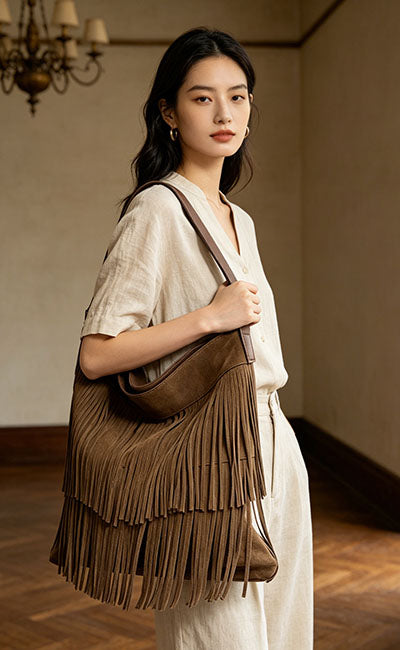
Suede-inspired surfaces and tactile finishes add depth to otherwise simple silhouettes.
For Fall/Winter collections, these materials can create a warmer and more seasonal appearance. However, brands should also consider care requirements, color transfer, and the performance expectations of their target markets.
Croc-Embossed and Vintage-Inspired Textures
Embossed textures are another way to give a familiar shape a more distinctive appearance.
Croc-embossed finishes, for example, can introduce a more luxurious visual effect without changing the fundamental construction of the bag.
This approach works particularly well with structured top-handle bags, flap bags, and compact shoulder styles.
Refined Hardware and Closures
Hardware plays an important role in communicating the character of a heritage-inspired handbag.
Instead of adding too many decorative elements, modern designs often benefit from carefully selected details, such as:
-
Minimalist turn-lock closures
-
Polished or brushed metal buckles
-
Subtle logo plates
-
Decorative zipper pulls
-
Refined handle attachments
The finish, weight, color, and placement of hardware should complement the overall design rather than compete with it.
4. How to Balance Heritage Aesthetics with Modern Consumer Needs
A successful heritage-inspired handbag needs to do more than look timeless. It should also meet the practical expectations of the people who will use it.
For brands developing new collections, the following areas deserve particular attention.
Functionality and Internal Organization
Traditional handbag designs do not always reflect modern carrying habits.
Consumers may expect space for smartphones, wallets, sunglasses, small cosmetic items, keys, and other daily essentials.
Product developers should consider:
-
Functional interior pockets
-
Secure zipper compartments
-
Easy-access openings
-
Suitable bag depth and capacity
-
Lightweight construction
-
Comfortable handle and strap proportions
The objective is to preserve the original silhouette while improving the everyday experience.
Versatile Carrying Options
A traditional top-handle or shoulder bag can become more practical with a detachable and adjustable strap.
This allows consumers to carry the same bag by hand, over the shoulder, or crossbody, depending on their needs.
For brands, convertible construction can also help a single design appeal to a broader customer group.
Modern Colors and Seasonal Updates
Color is another effective way to refresh a heritage silhouette.
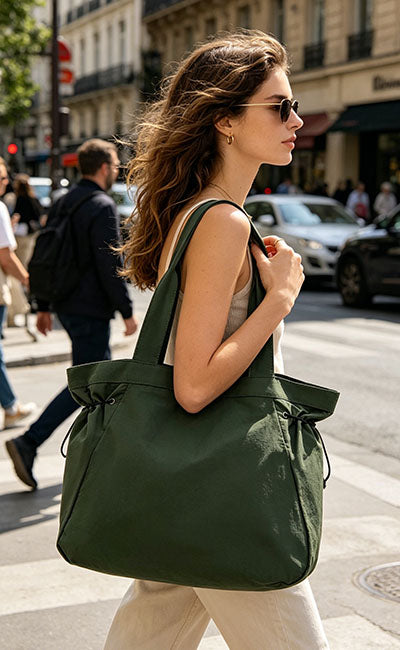
Classic shades such as black, chocolate brown, tan, and cream provide a timeless foundation. Meanwhile, burgundy, forest green, muted olive, and other seasonal colors can introduce a more contemporary character.
A balanced collection can combine permanent core colors with limited seasonal variations.
5. How Brands Can Turn Heritage Inspiration into Commercially Viable Collections
For handbag brands, the most effective approach is to treat heritage design as a starting point rather than a finished product.
A recognizable silhouette can be developed into several variations to serve different customer groups, price positioning, and sales channels.
Here are four practical strategies.
5.1 Build a Core Silhouette and Develop Multiple Variations
Start with one recognizable design foundation, such as a top-handle bag or classic flap bag.
Then explore variations in:
-
Size and proportions
-
Material and surface texture
-
Hardware and closure details
-
Strap configuration
-
Interior organization
-
Color combinations
This approach helps brands create a coordinated product family while maintaining a consistent design identity.
5.2 Match Design Decisions to Target Customers
Different customer groups may have different expectations.
For example:
-
Premium consumers: Refined materials, clean construction, understated hardware, and timeless proportions.
-
Working professionals: Practical capacity, secure compartments, comfortable carrying options, and structured organization.
-
Fashion-conscious consumers: Distinctive proportions, seasonal colors, and recognizable design details.
-
Travel-oriented consumers: Lightweight construction, functional compartments, and versatile carrying options.
These are useful product-development starting points rather than fixed rules. Brands should validate them against their own customer research and sales data.
5.3 Create a Balance Between Core and Seasonal Products
A well-planned collection does not need to rely entirely on new silhouettes every season.
Brands can maintain a group of core heritage-inspired designs and refresh them through seasonal materials, colors, and details.
For example, a classic shoulder bag could be offered in smooth leather-look material for a permanent collection, suede-inspired finishes for autumn, and lighter woven materials for spring and summer.
This approach can help create continuity while keeping the product range visually fresh.
5.4 Test Samples Before Moving into Bulk Production
Before launching a new heritage-inspired design, brands should evaluate more than its appearance.
Sample testing should consider:
-
Whether the bag maintains its intended shape
-
Whether handles and straps are comfortable
-
Whether the opening and closure work smoothly
-
Whether the material performs as expected
-
Whether stitching and edge finishing are consistent
-
Whether the internal capacity meets the design brief
These checks help identify potential issues before mass production and support more reliable product development.

6. The Role of OEM/ODM Manufacturing in Modern Heritage Handbag Development
Turning a heritage-inspired concept into a finished commercial product requires coordination between design, material selection, sampling, and production.
For brands that want to develop their own interpretation of classic handbag shapes, an experienced OEM/ODM bag manufacturer can help translate design ideas into production-ready products.
The development process may include:
Design Concept and Reference Collection
Brands provide sketches, reference images, target dimensions, or design requirements. The development team evaluates the intended silhouette and identifies the key features that should be retained.
Material and Hardware Selection
Suitable materials, linings, zippers, buckles, and decorative hardware are selected according to the product's design direction, target price, and performance requirements.
Prototype and Sample Development
A physical sample allows the brand to evaluate proportions, structure, functionality, and finishing details before confirming the design.
Product Refinement and Bulk Production
After sample approval, the design can move into production planning, with attention to material consistency, construction standards, and quality control.
For brands developing a private label handbag collection, this process offers an opportunity to create distinctive products inspired by heritage design while maintaining their own brand identity.
7. Looking Ahead: Heritage Design as a Long-Term Product Development Direction
The renewed interest in heritage handbag shapes is not simply about bringing old designs back into fashion.
It reflects a more considered approach to product development: retaining recognizable design elements while improving functionality, material quality, versatility, and contemporary relevance.
For brands planning future collections, several directions are worth watching:
-
Classic top-handle silhouettes with more relaxed proportions
-
East-west bags with updated dimensions and carrying options
-
Doctor-bag-inspired structures with lighter construction
-
Crescent bags with more sculptural shapes
-
Traditional flap designs with simplified hardware
-
Heritage silhouettes refreshed through seasonal textures and colors
The strongest opportunities may come from designs that feel familiar at first glance but offer a noticeably better experience in everyday use.
Conclusion
Heritage handbag shapes continue to inspire modern collections because they provide a strong foundation for timeless design. From structured top-handle bags to elongated shoulder styles and classic flap silhouettes, these familiar forms can be reimagined through updated materials, proportions, hardware, and functionality.
For fashion brands, the opportunity is to find the right balance between heritage aesthetics and modern consumer expectations.
With thoughtful design development and reliable manufacturing support, classic handbag shapes can become distinctive products that fit contemporary lifestyles and evolving market needs.
At Journion, we support brands in developing customized handbags through OEM and ODM manufacturing, from material selection and sample development to finished product production. Whether you are exploring a modern top-handle bag, a vintage-inspired shoulder bag, or a complete private label collection, the right development process can help turn your design concept into a market-ready product.
Your Journey, Our Craftsmanship.

