

Why Texture Is Becoming the New Focus in Handbag Design
Introduction: Why Texture Matters in Modern Handbag Design
For years, handbag design has focused heavily on silhouette, color, logos, and decorative details. Today, another element is attracting growing attention: texture.
In modern handbag design, the surface of a bag can be just as important as its shape. A softly grained leather tote, a woven shoulder bag, or a suede hobo bag can create a distinctive appearance without relying on bright colors or oversized branding.
Texture introduces depth, visual interest, and a sense of craftsmanship. It can make a minimalist handbag feel more sophisticated, give a familiar silhouette a fresh identity, and help a product stand out in a crowded fashion market.
Recent Spring/Summer 2026 handbag coverage from British Vogue and PORTER highlights textured and tactile materials, including suede, woven finishes, raffia, and braided leather. These directions demonstrate how material choice can contribute to both the visual identity and the styling versatility of a handbag.
For fashion brands, the growing importance of handbag texture trends creates opportunities to develop more distinctive collections through thoughtful material selection, surface treatments, and construction techniques.
So, why is texture becoming the new focus in handbag design, and how can brands turn this design direction into commercially relevant products?
1. Texture Creates Visual Interest Without Excessive Decoration
One reason textured handbags are becoming more appealing is that they can make a simple design look distinctive without adding unnecessary decorative elements.
A minimalist handbag may feature a clean silhouette, subtle hardware, and a neutral color palette. If the surface has a rich pebble grain, a woven pattern, or a softly brushed finish, the bag gains visual dimension while maintaining a refined appearance.
This approach works particularly well for brands targeting contemporary, premium, and understated fashion markets.
How Texture Enhances Handbag Design
Texture can influence a handbag's appearance in several ways:
-
Depth: Raised or irregular surfaces create light and shadow.
-
Character: Natural grains and woven patterns give materials a distinctive identity.
-
Tactile appeal: Soft, supple, or structured surfaces create different sensory impressions.
-
Visual contrast: Combining contrasting materials makes a design more engaging.
-
Perceived craftsmanship: Precise embossing, consistent weaving, and clean finishing can communicate attention to detail.
For example, a taupe tote made from smooth material may look understated, while the same silhouette in pebbled leather or embossed vegan leather can feel more expressive.
For brands developing custom handbags, texture offers a way to differentiate products while keeping the overall design clean and versatile.
2. The Key Handbag Texture Trends to Know in 2026
Handbag texture trends are not limited to one material or finish. Different textures serve different design objectives, from casual everyday styling to premium statement pieces.
Pebbled Leather: Everyday Texture With Practical Appeal
Pebbled leather features a naturally or mechanically produced grain pattern that creates a subtly raised surface.
It is a popular option for handbags because it adds visual interest without making the design feel overly decorative.
Potential applications include:
Depending on the leather and finishing process, a pebbled surface may also make minor surface marks less noticeable than on some smooth finishes.
For handbag brands, pebbled leather can be a useful option when developing versatile products that balance a premium appearance with everyday practicality.
Suede: Softness and Tactile Depth
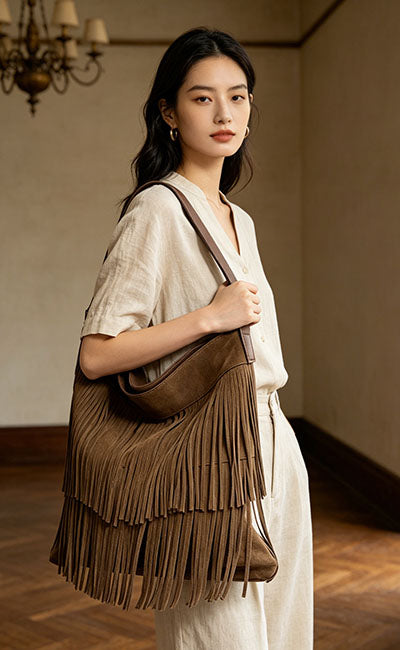
Suede is known for its soft, brushed surface and muted light reflection. It gives handbags a warm, relaxed appearance that differs from the cleaner finish of smooth leather.
Suede handbags can work particularly well in taupe, chocolate brown, camel, burgundy, olive, and other rich or understated colors.
Common applications include:
-
Soft hobo bags
-
Structured top-handle handbags
-
Compact evening bags
However, suede may require more careful maintenance than some finished leather or synthetic alternatives. Brands should consider intended use, color transfer, moisture exposure, and care requirements when selecting this material.
For manufacturers, suede also requires appropriate handling during cutting, assembly, and quality inspection to maintain a consistent surface appearance.
Embossed Leather: Texture With a Defined Pattern
Embossed leather uses pressure, heat, or specialized processes to create a raised or recessed pattern on a material surface.
Popular design directions include crocodile-effect embossing, lizard-inspired patterns, geometric textures, and subtle repeating grains.
Embossed finishes can make a classic handbag silhouette feel more distinctive without changing its basic structure.
For example, a structured top-handle bag in croc-embossed leather can look more visually expressive than the same design in a plain finish. A subtle embossed pattern on a tote can also introduce dimension while preserving a professional appearance.
Brands should consider pattern scale, material flexibility, surface consistency, and how the embossed finish behaves around seams, folds, and curved panels.
Woven Handbags: Craftsmanship as a Design Feature
Woven handbags use interlaced strips, panels, or fibers to create a dimensional surface.
Depending on the construction, weaving can introduce a handmade-inspired quality, a relaxed seasonal feel, or a more structured premium appearance.
Common applications include woven leather totes, braided shoulder bags, woven crossbody bags, and casual lifestyle handbags.
Woven construction can also make a relatively simple silhouette stand out without relying on a prominent logo.
From a manufacturing perspective, woven designs may require more preparation and assembly work than straightforward panel construction. Brands should evaluate material consistency, weaving density, edge finishing, and structural support during product development.
Quilted and Padded Texture: Dimension Through Construction
Quilting and padding create a raised surface through stitching, internal filling, or layered construction.
These techniques can add softness and dimension to handbags while creating recognizable visual patterns.
Popular applications include padded shoulder bags, quilted crossbody bags, compact flap bags, and soft evening accessories.
The result depends on the quilting pattern, stitch spacing, padding thickness, and outer material.
For premium collections, consistent quilting, symmetrical panels, and neat stitching are especially important because construction irregularities are often visible across the surface.
Brushed and Crinkled Finishes: A More Expressive Surface
Brushed and crinkled finishes create variation in the way a handbag reflects light.
Brushed surfaces often appear soft and muted, while crinkled finishes may produce irregular highlights and subtle changes in tone.
These finishes can work well for relaxed shoulder bags, statement handbags, and designs intended to look less rigid or uniform.
The appropriate finish depends on the material specification and desired appearance. Brands should confirm that the surface effect remains consistent across production batches.
3. Why Texture Is Becoming More Important Than Color Alone
Color remains a major consideration in handbag design, but texture gives brands another way to create differentiation.
Two handbags in the same brown shade can look completely different depending on their materials and finishes.
A smooth chocolate-brown leather handbag may feel polished and formal. A suede version can appear softer and more relaxed, while a croc-embossed version may look structured and more expressive.
This means brands can develop a coordinated collection using a limited color palette while offering different visual identities through surface treatments.
One Color, Multiple Design Directions
Consider a modern neutral palette featuring taupe, cream, olive, and chocolate brown.
These colors can be used across several handbag textures:
-
Taupe pebbled leather for an everyday shoulder bag
-
Cream smooth vegan leather for a minimalist tote
-
Olive woven material for a casual lifestyle bag
-
Chocolate suede for a soft hobo bag
-
Burgundy embossed material for a structured statement handbag
The result is a collection that feels cohesive without making every product look identical.
For brands targeting customers who prefer versatile wardrobes and understated styling, texture can be especially valuable because it adds interest without requiring a bold color or large decorative logo.
4. How Texture Supports Premium Handbag Positioning
A premium-looking handbag is not defined by material texture alone. Design proportions, construction quality, component selection, and finishing must work together.
However, texture can contribute to the impression of material quality and craftsmanship.
Texture and Quiet Luxury
Quiet-luxury-inspired handbags often use restrained branding, clean silhouettes, and carefully selected materials.
In this context, the surface itself can become a key design feature.
Subtle grain, refined suede, woven panels, and carefully controlled embossed patterns can create visual interest without overwhelming the design.
Texture and Product Differentiation
For brands competing in crowded categories, texture can help distinguish one collection from another.
Instead of changing the entire bag shape, a brand may introduce a new finish, material combination, or surface treatment to refresh an existing product concept.
This may support a broader collection strategy in which the same basic silhouette is developed in different versions for different customer preferences.
Texture and Craftsmanship
Visible surface details make manufacturing quality especially important.
Uneven grain appearance, inconsistent embossing, loose woven elements, irregular quilting, or poorly finished seams may weaken the intended premium effect.
Brands should therefore consider material selection and production feasibility together rather than treating texture as a purely decorative decision.
5. Material Texture and Construction: What Brands Need to Consider
Different textures require different approaches to cutting, stitching, reinforcement, and finishing.
When developing a textured handbag, the manufacturer needs to understand not only how the material looks but also how it behaves during production and everyday use.
Leather and Vegan Leather
Leather and vegan leather can both be used for smooth, grained, embossed, or quilted handbag designs, depending on the material specification.
Important considerations include:
-
Surface consistency
-
Material thickness
-
Flexibility and recovery
-
Cutting direction and material yield
-
Compatibility with stitching and edge finishing
-
Resistance to abrasion and surface damage
Not every material is suitable for every finish. A material intended for embossing, for example, must be evaluated for how well it accepts and retains the intended pattern.
Nylon and Technical Fabrics
Nylon handbags can also benefit from texture.
Options may include ripstop patterns, jacquard fabrics, crinkled surfaces, coated finishes, and woven textile structures.
These materials may be suitable for casual handbags, work bags, lightweight crossbody bags, and travel-oriented collections.
For functional products, brands should consider the balance between surface appearance, weight, flexibility, water resistance, and durability.
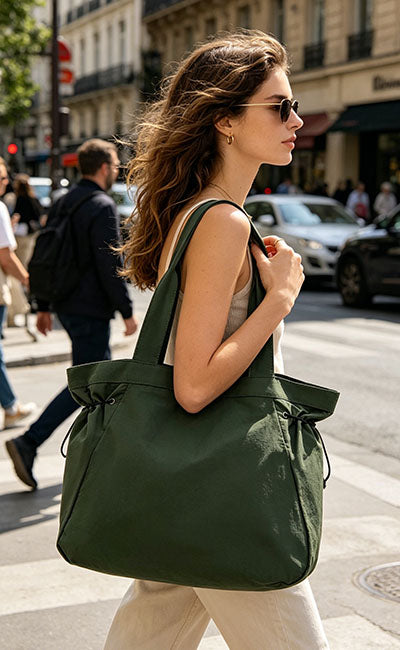
Canvas and Woven Textiles
Canvas and other woven fabrics offer texture through their yarn structure, weave density, and finishing treatments.
They may suit lifestyle totes, casual shoulder bags, and selected sustainable or recycled-material collections.
Material choice should account for the required structure, intended carrying load, color consistency, and finishing methods.
Combining Different Textures
Combining materials can create contrast and make a handbag more distinctive.
Examples include:
-
Smooth leather with pebbled leather panels
-
Woven fabric with leather trim
-
Suede accents with smooth vegan leather
-
Textured nylon with matte hardware
-
Quilted panels with a clean, structured base
A successful combination should feel intentional. Too many competing surfaces may make a design look visually busy or increase manufacturing complexity unnecessarily.
For custom handbag development, material combinations should be tested during sampling to evaluate appearance, flexibility, seam compatibility, and construction quality.

6. The Role of Hardware in Textured Handbag Design
When a handbag already has a distinctive surface, hardware should complement rather than compete with it.
A heavily embossed leather bag may benefit from simple buckles and understated metal details. A woven handbag may pair well with clean metal rings or restrained decorative elements.
Hardware finishes can also change the overall impression of a textured bag.
-
Gold hardware: Can introduce warmth and a polished appearance.
-
Silver hardware: Can create a cooler, contemporary contrast.
-
Matte black hardware: Can reinforce a modern, understated design.
-
Minimal hardware: Allows the material surface to remain the main focus.
The right combination depends on the intended style, target customer, and overall product positioning.
For brands planning a private label handbag collection, standard hardware may also be useful during early development. It allows the surface treatment and material selection to take priority before custom components are introduced.
7. How Texture Can Influence the Customer Experience
Handbag design is both visual and functional. A material that looks attractive in product photography must also perform appropriately in everyday use.
Texture affects how a handbag feels, how it reflects light, how it develops surface marks, and how much care it may require.
Tactile Appeal
Different textures create different sensory impressions.
Soft suede feels different from firm pebbled leather, while a woven surface has a more pronounced structure.
These differences can help brands position their products for different lifestyles and customer preferences.
Everyday Maintenance
Material texture may affect how a bag should be cleaned and maintained.
For example, suede typically requires different care from smooth finished leather, while heavily textured surfaces may make some marks less noticeable but may also require more attention when cleaning crevices.
Brands should provide appropriate care guidance based on the actual material and finish rather than making universal durability claims.
Practical Durability
Texture itself does not guarantee that a handbag will last longer.
Long-term performance depends on material quality, coating, construction, stitching, reinforcement, hardware, and the conditions in which the bag is used.
For brands, the most effective product development process evaluates appearance and performance together.
8. How Fashion Brands Can Use Texture in Custom Handbag Development
Texture creates opportunities for fashion brands to build differentiated collections without making every product structurally complicated.
A reliable custom handbag manufacturer can help evaluate material options, surface finishes, and construction requirements during the development process.
Develop a Signature Material Direction
A brand can establish a recognizable aesthetic by using a consistent group of textures across several styles.
For example, a collection may combine pebbled leather, smooth vegan leather, and subtle woven panels within a cohesive neutral color palette.
This approach can help create a recognizable product identity across totes, shoulder bags, hobo bags, and crossbody bags.
Match Texture to the Intended Customer
Texture should support the product's purpose and target market.
A professional work tote may benefit from refined grain and easy-care materials. A relaxed weekend bag may use softer textures, while a premium evening bag may feature quilting or embossed details.
Understanding customer preferences before selecting materials helps prevent design decisions that look attractive but are less suitable for the intended use.
Balance Design Impact With Production Complexity
Not every textured finish requires an entirely new product structure.
A brand may add a surface treatment to an existing silhouette, use a contrasting trim, or introduce a woven panel to create a different look.
However, special materials, custom embossing, complex weaving, and multiple texture combinations may require additional sourcing, sampling, or production work.
These factors should be included in the development budget and timeline.
9. OEM, ODM, and Private Label Opportunities for Textured Handbags
Texture-focused design is relevant to brands exploring OEM, ODM, and private label handbag manufacturing.
OEM Handbag Manufacturing
OEM is suitable for brands that have their own designs or product specifications and need a manufacturing partner to produce the handbag according to agreed requirements.
A brand may specify the surface finish, material composition, dimensions, hardware, lining, and other construction details.
ODM Handbag Manufacturing
ODM may suit brands that want design and product-development support.
Depending on the arrangement, the manufacturer may help explore available materials, refine the silhouette, assess construction feasibility, or develop sample options.
Private Label Handbag Manufacturing
Private label production allows brands to develop handbags under their own brand identity.
Customization may include materials, colors, texture, hardware, logo application, labels, and packaging, depending on the supplier's capabilities and minimum order requirements.
For brands exploring textured handbags, it is useful to confirm:
-
Available textured materials and finishes
-
Material sourcing and color options
-
Sample development requirements
-
Minimum order quantities
-
Custom embossing or tooling requirements
-
Surface consistency and quality-control standards
-
Production timelines and packaging specifications
An early discussion of these details can help brands choose a texture that fits both their creative direction and commercial requirements.
10. How to Choose the Right Texture for Your Next Handbag Collection
Before selecting a material finish, brands should assess several factors.
Define the Product Positioning
Determine whether the handbag is intended for everyday use, work, travel, casual styling, premium fashion, or special occasions.
The intended positioning will influence the appropriate texture, structure, and material.
Consider the Color Palette
Some textures work particularly well with certain colors.
Suede often creates a rich, muted appearance in taupe, camel, chocolate, and olive. Embossed leather can add dimension to deeper colors, while woven details can create visual interest in cream and other light neutrals.
These are design possibilities rather than strict rules. The final result depends on the material, finish, and overall silhouette.
Evaluate Maintenance and Durability
Consider how the bag will be used and what level of maintenance customers are likely to accept.
A texture that works well for occasional fashion use may not be the most practical choice for a bag carried every day in changing weather.
Test the Material Before Production
Samples help brands assess surface appearance, touch, flexibility, color, stitching, and compatibility with the bag's structure.
Where appropriate, material and component testing should also be defined according to the product's intended use and quality requirements.
Keep the Collection Cohesive
A strong collection does not need to use every available texture.
Selecting two or three complementary material directions may provide enough variety while maintaining a clear brand identity and more manageable production planning.
Conclusion: Texture Is More Than a Surface Detail
Texture is becoming an important focus in handbag design because it allows brands to create depth, character, and differentiation through materials and craftsmanship.
From pebbled leather and soft suede to woven constructions, embossed finishes, and quilted surfaces, different textures can transform familiar handbag silhouettes into products with distinct visual identities.
For fashion brands, the opportunity lies in choosing textures that complement the design, match the target customer, and remain practical to manufacture.
Working with an experienced custom handbag manufacturer can help brands evaluate material options, refine construction details, and develop products that balance appearance, functionality, quality, and cost.
As handbag design continues to explore richer materials and more tactile surfaces, texture offers a valuable way to build collections that feel considered, contemporary, and distinctive.