

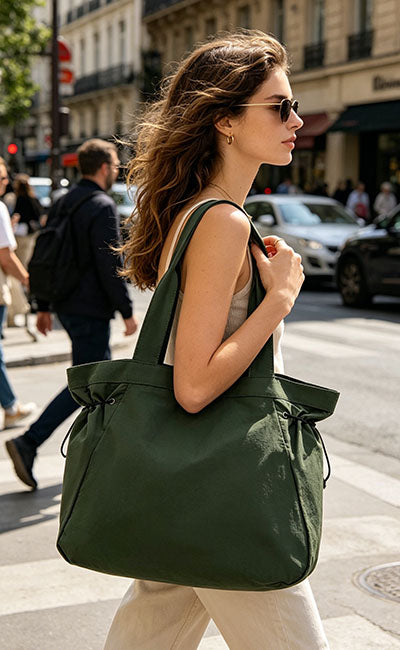


Article: How Different Materials Affect Handbag Construction
How Different Materials Affect Handbag Construction
A Practical Guide to Leather, Vegan Leather, Nylon, Canvas, Microfiber, and Sustainable Materials
When designing a handbag, the material is much more than a surface choice.
The material determines how the handbag feels in the hand, how it holds its shape, how it responds to stitching, how hardware can be installed, and how it performs after repeated use.
A structured leather handbag, for example, requires a very different construction approach from a lightweight nylon tote. A soft vegan leather shoulder bag may require different reinforcement from a canvas travel bag, while microfiber can create a refined appearance with relatively lightweight construction.
For brands developing handbags, understanding this relationship is essential.
The right material should not only match the design concept—it should also match the construction method and intended use.
1. Why Material Selection Is Critical in Handbag Manufacturing
Material selection is one of the earliest decisions in handbag manufacturing.
Before a handbag enters production, manufacturers need to consider several factors:
- Desired silhouette
- Target price
- Weight requirements
- Durability
- Flexibility
- Surface appearance
- Color options
- Hardware compatibility
- Stitching requirements
- Intended usage
- Sustainability goals
A material that looks beautiful in a sample may not necessarily be the best choice for mass production.
For example, a very soft material may create an elegant slouchy silhouette but provide insufficient support for a laptop tote.
Similarly, a rigid material may create excellent structure but make a large handbag uncomfortable to carry.
Therefore, successful custom handbag manufacturing requires a balance between aesthetics, functionality, and construction.
2. Leather: Structure, Luxury, and Natural Character
Leather remains one of the most recognizable materials in premium handbags.
Depending on the leather type and thickness, it can create anything from a soft, relaxed handbag to a highly structured luxury silhouette.
How Leather Affects Construction
Leather generally provides good durability and a premium appearance, but it also requires careful handling during production.
Manufacturers need to consider:
- Leather thickness
- Grain direction
- Cutting efficiency
- Stretch
- Surface consistency
- Edge finishing
- Stitching distance
- Reinforcement
- Hardware attachment
For structured handbags, leather may be combined with internal reinforcement materials to maintain the desired shape.
For softer handbags, the construction may rely more heavily on the natural characteristics of the leather.
Best Applications
Leather is commonly suitable for:
- Luxury handbags
- Leather totes
- Shoulder bags
- Crossbody bags
- Structured handbags
- Premium work bags
The key advantage is that leather can provide a combination of durability, tactile quality, and visual sophistication.
3. Vegan Leather: Flexible Design Possibilities
Vegan leather has become an important material category for modern handbag brands.
Depending on the formulation and backing fabric, vegan leather can be designed to resemble:
- Smooth leather
- Pebbled leather
- Grain leather
- Suede
- Patent leather
- Embossed leather
How Vegan Leather Affects Construction
Vegan leather is often more uniform than natural leather, which can make color and surface consistency easier to control.
However, different vegan leather materials behave differently during production.
Manufacturers need to evaluate:
- Flexibility
- Surface durability
- Thickness
- Backing material
- Folding behavior
- Edge finishing
- Heat resistance
- Stitching performance
The construction method should be selected according to the specific material rather than treating all vegan leather as the same.
Best Applications
Vegan leather can work well for:
- Women's handbags
- Tote bags
- Crossbody bags
- Shoulder bags
- Fashion handbags
- Private label handbags
For brands targeting a contemporary aesthetic, vegan leather can provide a balance between fashion appeal and manufacturing flexibility.
4. Nylon: Lightweight and Functional Construction
Nylon is widely used for practical and lightweight handbags.
Compared with leather, nylon is generally much lighter and more flexible.
This makes it particularly suitable for:
- Travel bags
- Backpacks
- Crossbody bags
- Lightweight totes
- Everyday bags
- Sports-inspired handbags
How Nylon Affects Construction
Because nylon is flexible, the bag often requires additional structural components to maintain its intended shape.
These may include:
- Foam
- Interlining
- Mesh
- Webbing
- Binding
- Lightweight reinforcement
Nylon also works particularly well with functional pocket systems.
For example, a nylon work tote may include:
- Laptop compartment
- Tablet sleeve
- Zipper pocket
- Water bottle pocket
- Key clip
- Front quick-access pocket
This makes nylon an excellent material for functional handbag design.
5. Canvas: Natural Texture and Strong Construction
Canvas is known for its durability and distinctive textile appearance.
Cotton canvas can create a more casual, natural aesthetic, while heavier canvas can provide substantial structure.
How Canvas Affects Construction
The thickness of canvas influences:
- Stitching
- Seam thickness
- Folding
- Edge treatment
- Handle attachment
- Overall bag weight
Heavy canvas can be highly durable but may require stronger needles and appropriate stitching techniques during manufacturing.
Canvas can also be combined with leather or vegan leather details to create a more premium appearance.
Popular Applications
Canvas is particularly suitable for:
- Canvas tote bags
- Travel bags
- Weekend bags
- Casual handbags
- Shopper bags
- Eco-inspired collections
For brands looking for a relaxed and versatile aesthetic, canvas remains a practical option.
6. Microfiber: Soft Feel With Controlled Performance
Microfiber is another interesting material for handbag construction.
High-quality microfiber can offer a smooth and refined surface while remaining relatively lightweight.
It can also be developed with different textures and finishes.
How Microfiber Affects Construction
Depending on its backing and thickness, microfiber can be used for both soft and semi-structured handbags.
Manufacturers should evaluate:
- Surface texture
- Thickness
- Flexibility
- Abrasion resistance
- Color consistency
- Stitching performance
- Edge finishing
Microfiber can be especially useful when brands want a refined appearance without using traditional leather.
Suitable Applications
- Premium handbags
- Crossbody bags
- Shoulder bags
- Tote bags
- Fashion accessories
- Private label collections
7. Recycled Materials and Sustainable Handbag Construction
Sustainability is influencing not only what handbags look like but also how they are constructed.
Materials such as RPET and recycled polyester can be used in different parts of a handbag, including:
- Exterior fabric
- Lining
- Pockets
- Webbing
- Packaging
How Sustainable Materials Affect Construction
Recycled fabrics can behave similarly to conventional synthetic fabrics, but manufacturers still need to evaluate their specific specifications.
Important considerations include:
- Fabric density
- Thickness
- Tensile strength
- Colorfastness
- Abrasion resistance
- Coating
- Lamination
- Stitching performance
For brands developing sustainable handbags, material selection should therefore be integrated with the entire product-development process.
8. Material Thickness Changes the Entire Bag Structure
One of the most important technical factors in handbag construction is material thickness.
Two materials may look similar but behave very differently because of their thickness.
A thicker material can provide:
- Better structure
- Higher durability
- More substantial feel
But it can also make:
- Folding more difficult
- Stitching more demanding
- Seams bulkier
- Hardware installation more complicated
A thinner material can provide:
- Lower weight
- Greater flexibility
- Easier folding
But it may require additional reinforcement.
This is why manufacturers often combine different materials rather than relying on one material throughout the entire handbag.
9. Reinforcement Materials Are Just as Important
The exterior material is only one part of handbag construction.
Inside the handbag, manufacturers may use different reinforcement materials to control structure and stability.
These can include:
- Interlining
- Foam
- Non-woven reinforcement
- Fabric backing
- Cardboard
- Synthetic reinforcement
- Structural panels
For example, a structured tote may use reinforcement in the:
- Bottom
- Side panels
- Front panel
- Back panel
- Handle attachment area
This allows the handbag to maintain its silhouette without necessarily using a very thick exterior material.
10. Different Materials Require Different Stitching Techniques
Handbag stitching is another area strongly influenced by material selection.
Soft fabrics can usually accommodate different stitching patterns more easily, while thick materials may require carefully controlled needle penetration and thread tension.
Manufacturers need to consider:
- Thread size
- Stitch length
- Needle selection
- Seam allowance
- Thread tension
- Number of stitches
- Stress points
High-stress areas such as handles, shoulder straps, and hardware attachment points often require additional reinforcement.
This is particularly important for bags designed to carry heavy products such as laptops, books, or travel items.

11. Edge Finishing Depends on the Material
Edge finishing can significantly affect the appearance of a handbag.
Different materials may require different techniques, including:
Edge Painting
Often used for leather and leather-like materials.
It can create a clean and sophisticated edge.
Binding
Commonly used for fabric and nylon construction.
It protects raw edges while creating a finished appearance.
Folding
Some materials can be folded inward to create a clean edge without additional binding.
Raw Edge
Sometimes used intentionally for casual or fashion-forward designs.
The choice of edge treatment should reflect both the material and the desired aesthetic.
12. Hardware Installation Must Match the Material
Hardware includes:
- Zippers
- Buckles
- Rings
- Hooks
- Rivets
- Magnetic closures
- Metal feet
- Decorative hardware
Material strength affects how hardware can be attached.
For example, a lightweight nylon fabric may require additional reinforcement behind a metal D-ring.
A leather handbag may support rivets or other hardware more naturally, but reinforcement can still be necessary at high-stress points.
This is why hardware and material selection should be considered together, rather than as separate design decisions.
13. The Lining Should Match the Construction
The lining contributes to both functionality and perceived quality.
Common handbag lining materials include:
- Polyester
- Nylon
- Cotton
- Recycled polyester
- Microfiber
A good lining should complement the exterior material.
For example:
Lightweight nylon exterior → lightweight functional lining
Premium leather exterior → refined and durable lining
Sustainable canvas exterior → recycled or natural-fiber lining
The lining can also be used to introduce organizational features such as:
- Zipper pockets
- Slip pockets
- Laptop sleeves
- Key clips
- Cosmetic compartments
14. Material Choice Influences Handbag Weight
Weight is becoming increasingly important for modern handbag design.
A large handbag can become uncomfortable if the construction uses unnecessarily heavy materials and hardware.
This is especially important for:
- Oversized tote bags
- Laptop bags
- Travel handbags
- Large shoulder bags
Lightweight materials such as nylon and certain synthetic fabrics can help reduce overall weight.
However, lightweight construction still needs sufficient reinforcement to maintain durability.
The objective is not simply to make the handbag lighter.
It is to achieve the right balance between:
Weight + Structure + Durability + Comfort
15. Soft Materials Create Different Silhouettes
Material flexibility directly influences handbag shape.
Soft materials tend to create:
- Relaxed silhouettes
- Slouchy shapes
- Draped sides
- Casual aesthetics
Structured materials tend to create:
- Defined edges
- Geometric silhouettes
- Professional appearance
- More formal styling
This means the material should be selected based on the intended silhouette.
For example, a hobo bag generally benefits from softer materials, while a structured business tote may require stronger reinforcement and more stable materials.
16. Material Combinations Can Create Better Handbags
Modern handbags rarely need to rely on a single material.
Combining materials can improve both functionality and appearance.
For example:
Leather + Canvas
Creates a premium yet casual aesthetic.
Nylon + Leather
Combines lightweight performance with refined detailing.
Vegan Leather + Textile
Provides structure while reducing visual heaviness.
Canvas + RPET
Creates a more sustainable casual handbag concept.
Microfiber + Reinforced Textile
Can create a refined surface with controlled structure.
Material combinations give brands greater flexibility when developing unique handbag collections.
17. Material Selection Also Influences Cost
Material is one of the major factors influencing handbag production cost.
However, the cheapest material is not necessarily the most cost-effective choice.
Brands should consider:
- Material price
- Cutting efficiency
- Production time
- Waste rate
- Sewing difficulty
- Hardware requirements
- Finishing requirements
- Expected product lifespan
A slightly more expensive material may actually provide better overall value if it improves durability, reduces production problems, or creates a stronger premium positioning.
For private label handbag brands, this is especially important when balancing target retail price with product quality.
18. How Brands Should Choose Materials for Different Handbags
Different handbag categories require different material strategies.
| Handbag Type | Recommended Material Direction |
|---|---|
| Luxury Handbag | Leather / Premium Vegan Leather / Microfiber |
| Work Tote | Leather / Nylon / Vegan Leather |
| Laptop Tote | Nylon / Canvas / Structured Vegan Leather |
| Crossbody Bag | Nylon / Leather / Vegan Leather |
| Travel Bag | Nylon / RPET / Canvas |
| Weekend Bag | Canvas / Nylon / Leather Details |
| Casual Tote | Canvas / Cotton / Recycled Fabric |
| Sustainable Handbag | RPET / Recycled Nylon / Organic Textile |
The final choice should always be based on the target customer, price positioning, intended use, and desired construction.
19. Material Testing Is Essential Before Mass Production
Before beginning large-scale handbag production, materials should be evaluated through sampling and testing.
Depending on the product, manufacturers may examine:
- Abrasion resistance
- Colorfastness
- Tear strength
- Tensile strength
- Water resistance
- Surface durability
- Stitching performance
- Hardware attachment
- Edge durability
These tests help identify potential problems before mass production.
A professional handbag manufacturer should be able to communicate how the selected material performs during actual construction.
20. How OEM & ODM Manufacturers Help With Material Selection
For brands working with an OEM handbag manufacturer or ODM handbag manufacturer, material selection can become part of the product-development process.
An experienced manufacturer can help brands evaluate:
- Material suitability
- Thickness
- Color options
- Surface finishes
- Lining combinations
- Reinforcement
- Hardware compatibility
- Construction techniques
- Production feasibility
This is especially valuable when a brand has a design concept but is uncertain which material will deliver the intended result.
Instead of simply asking:
"Which material looks best?"
Brands should ask:
"Which material will deliver the right appearance, performance, construction, and cost for this product?"
21. The Best Material Is the One That Fits the Product
There is no single "best" handbag material.
Leather may be ideal for a premium structured handbag.
Nylon may be better for a lightweight travel bag.
Canvas may work well for a casual tote.
Microfiber may provide a refined alternative for contemporary collections.
RPET may support a sustainability-focused product strategy.
The right decision depends on the complete product concept.
A successful handbag combines:
Material + Construction + Function + Design + Quality
FAQ
What is the best material for handbag manufacturing?
There is no universal best material. Leather, vegan leather, nylon, canvas, microfiber, and recycled fabrics each offer different advantages depending on the handbag's design, intended use, price, and target market.
Which handbag material is the most durable?
Durability depends on the specific material quality and construction. Leather, high-quality nylon, heavy canvas, and certain performance fabrics can all provide strong durability when properly constructed.
Is nylon good for handbags?
Yes. Nylon is lightweight, flexible, and suitable for functional handbags, travel bags, backpacks, crossbody bags, and work totes.
Is vegan leather good for handbags?
High-quality vegan leather can be suitable for fashion handbags, totes, crossbody bags, and private label collections. Its performance depends on its formulation, thickness, backing, and surface finish.
What material is best for sustainable handbags?
RPET, recycled polyester, recycled nylon, organic cotton, and other responsibly sourced materials can be used for sustainable handbag development. The appropriate option depends on the product requirements and available certifications.
Can handbag materials be customized?
Yes. Brands working with a custom handbag manufacturer can often customize material type, color, texture, thickness, finish, lining, reinforcement, and material combinations.
Conclusion
Material selection is one of the foundations of successful handbag construction.
Leather, vegan leather, nylon, canvas, microfiber, and recycled fabrics each create different possibilities for structure, weight, durability, stitching, finishing, and overall appearance.
For handbag brands, choosing a material should therefore go beyond visual appeal.
The best results come from considering the entire product-development process—from material selection and pattern making to reinforcement, stitching, hardware installation, lining, edge finishing, and quality control.
For brands developing custom handbags, private label handbags, or OEM/ODM handbag collections, working with an experienced manufacturer can make this process more efficient and predictable.
Ultimately, the right material is not simply the one that looks good.
It is the material that allows the entire handbag to perform, feel, and look exactly as intended.

